
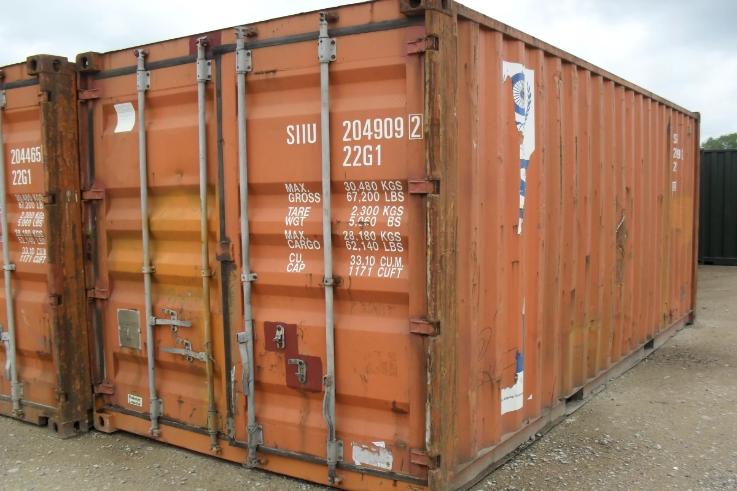
Many of the searches that bring buyers to us come from outside the United States: “shipping container Ireland”, “shipping containers Ottawa”, “shipping container Gold Coast”, “shipping containers Coventry”, “shipping container Mexico”. The question behind all of them is the same: can I buy a container from a U.S. depot and get it delivered here, and what do I need to know first? This guide explains how international purchases work, what you need to arrange on your side, and where to find country-specific detail.
Quick answer: yes. We sell containers direct from our depot network with international export available. The buyer usually handles import clearance, duties and taxes, and local delivery from the arrival port, so plan those costs and paperwork before you order. Start with our importing a shipping container guide, then request a quote through any product page.
How buying a container for export works
- Choose the container. Match size and grade to your use. If it will be re-shipped or lifted often, cargo worthy or newer is the safer choice. See the grades guide.
- Decide the shipping terms. Quotes can cover the container at our depot, delivery to a port, or sea freight to a destination port. Ask which is included.
- Book freight. A freight forwarder handles the ocean leg, schedules and documents.
- Clear customs at destination. A local customs broker files the import entry, pays duties and taxes, and arranges any inspection.
- Arrange inland delivery. A truck moves the container from the port to your site. Check access and unloading before it arrives.
What affects the total landed cost
- The container price and grade.
- Inland transport in the U.S. to the departure port.
- Ocean freight, which changes with route, season and demand.
- Destination port fees and handling.
- Import duties and sales or value-added taxes, which differ by country and by how the container is classified.
- Customs broker fees.
- Inland delivery to your site.
Because these vary, ask for an itemized quote and confirm what is included. Our pricing guide explains how container prices are built.
Country notes: what to check before you buy
United Kingdom
Buyers in places like Coventry, Gateshead, Newcastle and Stockport usually ask about import costs and delivery from the port. See our dedicated page: buy shipping containers for export to the UK. Confirm customs classification and VAT treatment with your broker.
Ireland
See shipping containers for export to Ireland for the route and what to prepare.
Canada
Canadian buyers (Ottawa, Halifax and elsewhere) should check import requirements with the Canada Border Services Agency or a licensed customs broker, including duties and taxes. If your goal is to move containers within Canada, the cost question is mostly inland trucking. Ask us for the export option on any product you are considering.
Australia
Australia has strict biosecurity rules for imported goods and cargo containers. Buyers in places like Gold Coast, Adelaide and the Australian Capital Territory should confirm the current requirements with the Australian Department of Agriculture and a licensed customs broker before purchasing a used container. A cleaner, newer container such as a 40ft high cube one-trip container can reduce condition concerns, but it does not replace checking the rules.
Mexico, Portugal, Singapore and other markets
We have specific guides for Mexico (Manzanillo), Portugal (Lisbon and Sines) and Singapore. For other destinations, send us the country and port in your quote request and we will tell you plainly whether we can support it.
Tell us your country, port and container size, and we will confirm export options.
Which container is best for export?
For a one-way purchase that will sit on your property, cargo worthy or wind and water tight is usually enough. If you want the cleanest unit, or plan to modify it, choose a newer one-trip container. Popular starting points are the 20ft standard one-trip container and the 40ft high cube cargo worthy container. If you plan to use it as a workspace, the office kit and office container guide are helpful.
For cold-chain exports, a reefer is the right box; see the 40ft reefer guide.
Documents you will typically need
- Commercial invoice from the seller.
- Bill of lading from the carrier.
- Packing list (for containers with cargo).
- Import declaration filed by your customs broker.
- Any country-specific certificates your destination requires.
Frequently asked questions
Can I buy a container from the U.S. and ship it overseas?
Yes. We offer international export on our containers. Request a quote with your destination.
Do I need a customs broker?
Almost always. A licensed broker files the import entry and helps you avoid delays at the port.
Is it cheaper to buy locally?
Sometimes. Container prices, freight and taxes differ by market, so compare the full landed cost, not just the sticker price.
Do you ship to my country?
Ask with your country and port. We will confirm what we can support instead of guessing.
Next step
Choose your container, name your destination port, and request an itemized quote that spells out what is and is not included.
Start with the full product range.
Laisser un commentaire