
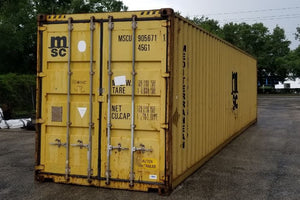
“Condition grade” is the single most important spec on a container listing after size, and it’s also the most misunderstood. Grades aren’t marketing labels — they come from real inspection standards used across the shipping industry. Here’s what each one actually means.

One-Trip
One-trip containers have made exactly one loaded ocean voyage — from the factory (almost always in Asia) to their first port of call — before being sold. They’re the closest thing to new you can buy: minimal rust, straight panels, and only the cosmetic wear of a single trip. They cost more than used grades but far less than a brand-new, never-shipped unit, which makes them the most popular choice for buyers who want a clean container for a home, office, or business front.
Cargo-Worthy (CW)
Cargo-worthy containers have been inspected and certified fit to carry ocean freight again. They’ve typically made several trips, show real wear — surface rust, dents, faded paint — but have no structural damage, and their doors, seals, and floor all function properly. CW is a solid, cost-effective grade for storage, job-site use, or as a base for modification, since any cosmetic issues get covered up during a build-out anyway.
Wind-and-Watertight (WWT)
WWT containers are no longer certified for ocean freight, usually due to accumulated cosmetic damage or a few small issues, but they’re guaranteed to keep wind and rain out — no active leaks, no holes, and doors that seal properly. This is the budget-friendly grade for straightforward dry storage where structural certification for reshipping doesn’t matter, but a rust-free, leak-free box does.
“As-Is” and economy grades
Below WWT, some containers are sold “as-is” or as economy-grade units — functional but with cosmetic issues, and sometimes small deficiencies like a dented panel or a door that needs adjustment. These are the least expensive option and can work well for very tolerant storage uses, but they’re not a good starting point for a livable conversion.
Which grade should you buy?
For a home, office, or anything the public will see, one-trip is worth the premium. For general storage or job-site use, cargo-worthy or WWT typically offers the best value. Our new vs. used containers guide goes deeper on this decision, and our pricing guide shows how grade affects cost by size.
Inspect before you buy
Whatever grade you’re quoted, ask for current photos of the doors, floor, and roof, and confirm the grade in writing on your order. See our lifespan & maintenance guide for what to check and how long each grade should hold up. Ready to compare grades on real units? Browse our current inventory.
Ready to buy at the right grade? See containers for storage and refrigerated containers for sale to shop by grade and size.
Laisser un commentaire