
A bare steel shipping container is a great structure and a terrible thermal envelope. Without insulation, an uninsulated box can swing from freezing overnight lows to well over 120°F inside on a sunny afternoon, and condensation (“container rain”) will form on the ceiling as warm, moist air meets cold steel. If you’re converting a container into an office, cabin, or workshop, insulation is the single upgrade that makes the space usable year-round.
Why steel containers need insulation
Steel is highly conductive, so a container’s walls transfer outside temperature straight to the interior almost instantly. Insulation slows that transfer and, just as importantly, keeps the interior air warmer than the steel skin’s dew point so moisture doesn’t condense on the ceiling and drip onto whatever is stored below. Any conversion meant for people, electronics, or moisture-sensitive inventory should be insulated before anything else is built out.
Spray foam insulation
Closed-cell spray polyurethane foam is the most common choice for container conversions. It’s sprayed directly onto the interior steel, expanding to fill every rib and seam with no gaps for moisture to sneak through. At 2–3 inches thick it delivers roughly R-13 to R-20, and because it bonds to the steel it also adds a layer of corrosion resistance on the inside face. It’s a good fit for offices, cabins, and workshops where interior wall thickness loss (a few inches per side) isn’t a concern.
Rigid foam panel insulation
Rigid polyisocyanurate or XPS panels are cut to fit between furring strips and fastened to the container walls. Panels are less expensive per square foot than spray foam and easier to source locally, but seams need to be taped or foamed to stop air leaks, and they don’t provide the same moisture-sealing performance as a monolithic spray-foam layer. Panels work well for budget builds and DIY projects where a contractor isn’t spraying foam on-site.
Insulated siding and pre-built options
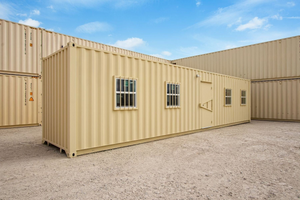
For a turnkey approach, many buyers choose containers that already come insulated and sided from the factory, like our insulated office with siding. These units pair interior spray foam with an exterior siding layer that also protects the paint and adds a residential look, which is useful if the container will sit somewhere visible rather than at the back of a job site.
Which R-value do you actually need?
For an occasionally-used workshop or storage-adjacent office, R-13 spray foam is usually enough. For a container that will be lived in or run HVAC year-round, aim for R-19 or higher, which typically means thicker spray foam plus a service cavity, or foam panels combined with a mineral wool layer. Climate matters too — a container home in a northern climate needs meaningfully more insulation than the same build in the Gulf Coast.
Related reading
Insulation is one piece of a larger conversion. See our modifications guide for what else can be cut, added, or reinforced, our electrical wiring basics guide for powering an insulated build, and new vs. used containers if you’re still deciding on a base unit. Ready to spec out a build? Financing options are available, and our team can help you pick the right container for insulation from day one.
Shopping for an insulated build? See our container offices for sale and homes & cabins for sale — both come with insulation already factored into the build.
Choosing HVAC equipment? See our heating & cooling options guide.
Laisser un commentaire