
🚚 Ready to order today? Use code SHIPTODAY50 for $50 off any order — no signup needed. Shop Now

Category: Delivery & Logistics

  • Mobile & Towable Shipping Containers for Sale

    Mobile & Towable Shipping Containers for Sale

    Some containers stay put for years; others need to move between fields, job sites, or seasonal locations on a regular basis. If that’s your use case, a gooseneck-ready container is worth setting up from the start rather than arranging a tilt-bed truck every time it needs to relocate.
    Mobile shipping container ready for towing
    A gooseneck tunnel lets a container ride low enough for towing behind a pickup truck.

    Why gooseneck-ready matters for frequent moves

    A standard container needs a tilt-bed truck or a crane to relocate, which means scheduling and paying for transport every time. A container modified with a gooseneck tunnel sits low enough to tow directly behind a pickup with a gooseneck hitch, which is a real advantage for farms, ranches, and contractors who move a container between sites several times a season.

    Best fits for a towable setup

    This modification makes the most sense for equipment and tool storage that travels with a job, seasonal farm storage that moves between fields, and any small business that sets up temporary operations in different locations throughout the year. See our farm storage guide and construction site guide for related use cases.

    What the modification involves

    A gooseneck tunnel is a structural cutout and reinforcement package, not a simple bolt-on — see our modifications guide for how structural cuts like this are properly reinforced to keep the container sound after the cut.

    Towing and transport basics

    See our moving & transporting guide for what to check before towing a container yourself, including load securing and site access at both ends of the move.

    Order a gooseneck-ready container

    Ask about adding a gooseneck tunnel to a new container order, or retrofitting one you already own.
  • Moving & Transporting a Shipping Container: What to Know

    Moving & Transporting a Shipping Container: What to Know

    Buying a container and relocating one you already own are two different logistics problems. Initial delivery is handled by the seller’s truck and driver, but moving a container again later — to a new property, or to a different spot on the same lot — is something owners often have to arrange themselves.

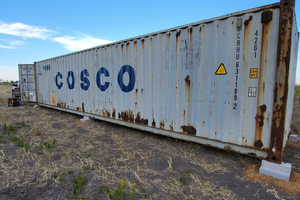
    Shipping container ready for transport
    A container’s corner castings are also its lifting and tie-down points during transport.

    How containers are typically moved

    Most container transport uses a tilt-bed truck, which lowers its bed to ground level, winches the container on, and lifts back to a driving position — no crane needed for a straightforward move on solid ground. For sites where a full-size delivery truck can’t maneuver, a smaller flatbed with a forklift or a rented crane may be needed instead.

    Gooseneck trailer towing

    For an owner who wants to move a container themselves rather than hiring transport each time, a gooseneck tunnel modification lets the container sit low enough on a gooseneck trailer to tow behind a pickup truck. This is popular for farm and mobile job-site containers that relocate more than once.

    What to check before a move

    Confirm the container is empty or that contents are secured — an unsecured load shifting during transport can damage both the contents and the container’s interior. Check that all doors are locked and, if the container has been modified with windows or cutouts, confirm those openings are structurally sound enough to handle the stress of lifting and transport; see our structural guide for how modifications affect a container’s rigidity.

    Access and clearance at the new site

    The same clearance rules that apply to original delivery apply to a relocation — see our delivery process guide for truck access requirements, and prepare the new site the same way you would for a first delivery, per our foundation & site prep guide.

    Get help planning a move

    Whether you’re buying a container that will need to relocate later or already own one, reach out for guidance on the right transport setup for your situation.

  • Shipping Containers for Construction Sites: Job-Site Storage & Security

    Shipping Containers for Construction Sites: Job-Site Storage & Security

    Tool theft and weather damage are two of the most avoidable losses on a construction site, and a shipping container solves both at once: a lockable, weatherproof box that can be delivered before the first day of work and moved again once the job wraps.

    Locked shipping container on a construction site
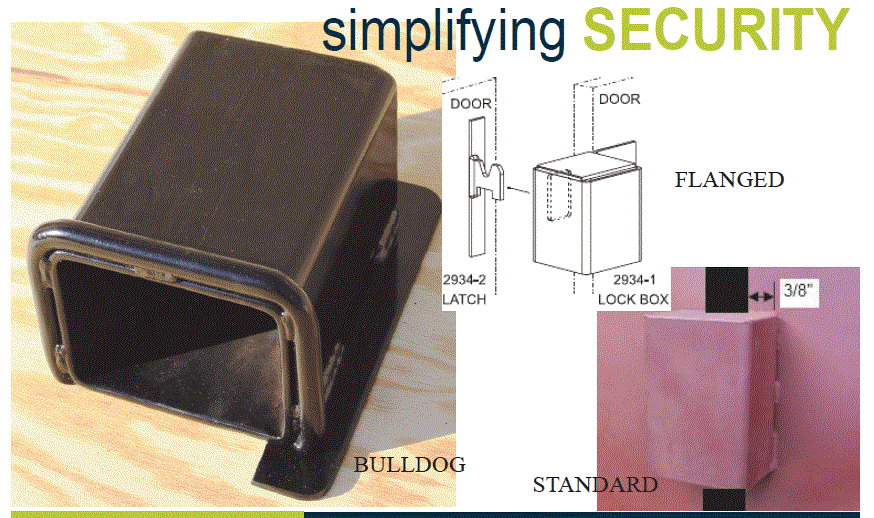
    A lock box turns a job-site container into a genuinely secure place to store tools and materials.

    Sizing for tools vs. materials

    A 20ft container is usually enough for a small crew’s power tools, hand tools, and consumables. Larger crews or projects storing bulk materials — lumber, fixtures, mechanical equipment — typically need a 40ft container instead. See our dimensions guide for exact interior capacity.

    Job-site security

    Tool theft from job sites is common enough that most contractors treat container security as a required expense, not optional. A welded lock box is the standard first upgrade — see our full security guide for hardware and site-setup tips that go beyond just the lock.

    Placement and site logistics

    Confirm delivery truck access before the container arrives — see our delivery process guide for clearance requirements — and place the container where it won’t block equipment movement or future phases of the build. A compacted gravel pad keeps the container level even as site conditions change during construction.

    Rent for the project, buy for the company

    For a single project, renting a container for the duration usually costs less than buying and reselling afterward. For a contracting company running multiple job sites long-term, buying pays for itself faster. See our renting vs. buying guide to run the numbers for your situation, or browse container rentals directly.

    Get a job site set up

    Check delivery availability for your site address, or request a quote covering delivery, a lock box, and the size that fits your crew.

  • Shipping Container Delivery: What to Expect on Delivery Day

    Shipping Container Delivery: What to Expect on Delivery Day

    Shipping container delivery is different from a typical freight delivery — the unit is heavy, large, and usually placed exactly where you’ll use it long-term. Here’s what actually happens between placing your order and having a container sitting on your site.

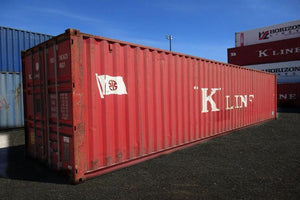
    40ft Standard Economy Grade Shipping Container

    Step 1: Depot Assignment & Scheduling

    Once your order is confirmed, we assign it to the closest depot with your size and condition grade in stock, then schedule a carrier. Most orders ship within 5–10 business days, depending on your ZIP code and depot availability.

    Step 2: Site Access Requirements

    Before delivery day, make sure your site is ready:

    • A clear path at least as wide as the truck and trailer, free of low branches or wires
    • Reasonably level, firm ground — gravel, concrete, or compacted soil all work well
    • Enough straight-line space for the delivery truck to tilt or roll the container off the trailer (this typically needs significantly more length than the container itself)
    • Any required local permits already in hand — see our FAQ for guidance on permit requirements

    Step 3: Delivery Method

    Most containers are delivered by tilt-bed or roll-off trailer, which lowers the unit to the ground without needing a crane in most cases. Difficult sites — tight urban lots, steep grades, or obstructed access — may require a crane or forklift, which can add to delivery cost. Let us know about site constraints when you order so we can quote accurately.

    Step 4: Inspecting Your Container at Delivery

    This is the most important step. Before signing the delivery paperwork:

    • Walk the full exterior and check for transit damage
    • Open the doors and inspect the interior, floor, and door seals
    • Confirm the unit matches the condition grade and size you ordered
    • Take photos and note anything unexpected directly on the delivery receipt

    Full detail on how damage claims and refunds work is in our Refund & Returns Policy.

    Step 5: Depot Pickup as an Alternative

    If you have your own transport or want to reduce delivered cost, depot pickup is available on most orders. This is often the fastest way to get your container, since it removes carrier scheduling from the timeline entirely.

    International & Export Delivery

    Beyond nationwide U.S. delivery, we export to Canada, the Caribbean, Latin America, Europe, and other destinations through major ports. International orders are quoted individually based on destination port, container type, and shipping method — see our locations & service areas page for coverage details.

    Get Your Delivered Price

    Delivery cost is already factored into the number you get from our quote calculator — enter your container size and ZIP code for an exact, no-surprises price.

    Curious whether we deliver to your area? Check our state, city, and international delivery guides for pricing and timelines specific to your location.

    Related Articles

    Need to relocate a container later? See our moving & transporting guide.