🚚 Ready to order today? Use code SHIPTODAY50 for $50 off any order — no signup needed. Shop Now

Author: Container Depot Direct Team

  • Shipping Container Delivery: What to Expect on Delivery Day

    Shipping Container Delivery: What to Expect on Delivery Day

    Shipping container delivery is different from a typical freight delivery — the unit is heavy, large, and usually placed exactly where you’ll use it long-term. Here’s what actually happens between placing your order and having a container sitting on your site.
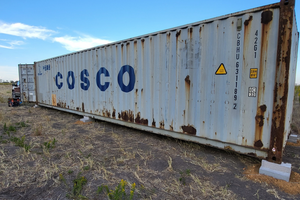
    40ft Standard Economy Grade Shipping Container

    Step 1: Depot Assignment & Scheduling

    Once your order is confirmed, we assign it to the closest depot with your size and condition grade in stock, then schedule a carrier. Most orders ship within 5–10 business days, depending on your ZIP code and depot availability.

    Step 2: Site Access Requirements

    Before delivery day, make sure your site is ready:

    • A clear path at least as wide as the truck and trailer, free of low branches or wires
    • Reasonably level, firm ground — gravel, concrete, or compacted soil all work well
    • Enough straight-line space for the delivery truck to tilt or roll the container off the trailer (this typically needs significantly more length than the container itself)
    • Any required local permits already in hand — see our FAQ for guidance on permit requirements

    Step 3: Delivery Method

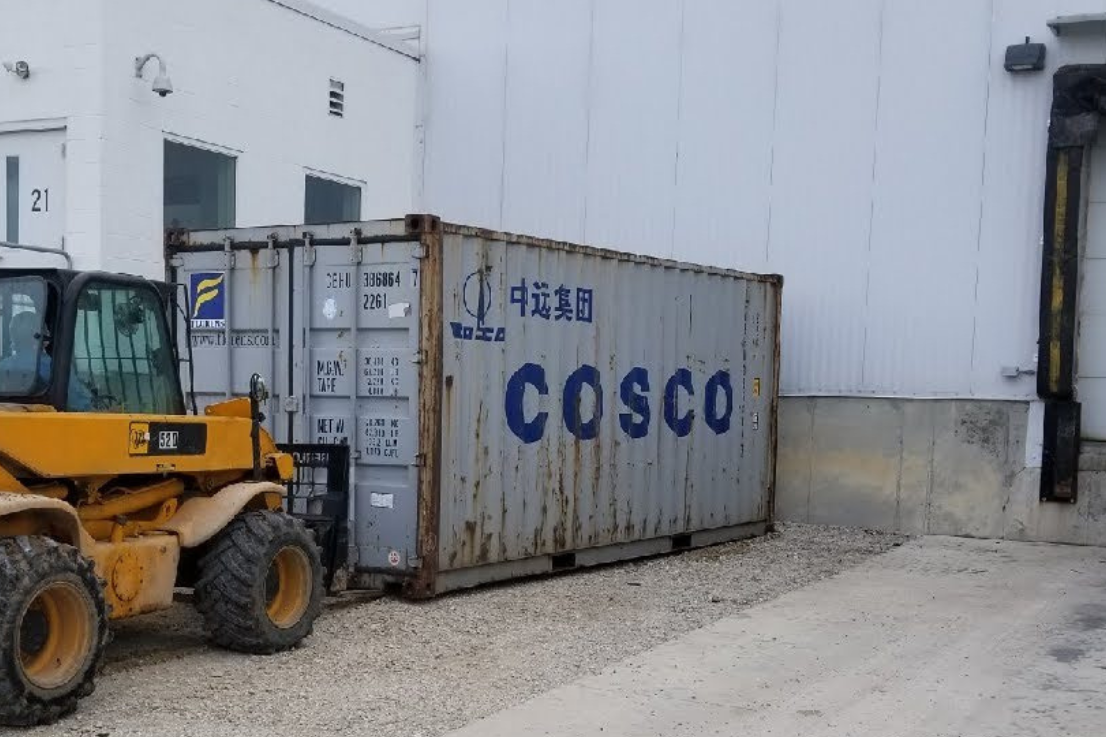
    Most containers are delivered by tilt-bed or roll-off trailer, which lowers the unit to the ground without needing a crane in most cases. Difficult sites — tight urban lots, steep grades, or obstructed access — may require a crane or forklift, which can add to delivery cost. Let us know about site constraints when you order so we can quote accurately.

    Step 4: Inspecting Your Container at Delivery

    This is the most important step. Before signing the delivery paperwork:

    • Walk the full exterior and check for transit damage
    • Open the doors and inspect the interior, floor, and door seals
    • Confirm the unit matches the condition grade and size you ordered
    • Take photos and note anything unexpected directly on the delivery receipt

    Full detail on how damage claims and refunds work is in our Refund & Returns Policy.

    Step 5: Depot Pickup as an Alternative

    If you have your own transport or want to reduce delivered cost, depot pickup is available on most orders. This is often the fastest way to get your container, since it removes carrier scheduling from the timeline entirely.

    International & Export Delivery

    Beyond nationwide U.S. delivery, we export to Canada, the Caribbean, Latin America, Europe, and other destinations through major ports. International orders are quoted individually based on destination port, container type, and shipping method — see our locations & service areas page for coverage details.

    Get Your Delivered Price

    Delivery cost is already factored into the number you get from our quote calculator — enter your container size and ZIP code for an exact, no-surprises price.

    Curious whether we deliver to your area? Check our state, city, and international delivery guides for pricing and timelines specific to your location.

    Related Articles

    Need to relocate a container later? See our moving & transporting guide.
  • New vs. Used Shipping Containers: Which Should You Buy?

    New vs. Used Shipping Containers: Which Should You Buy?

    One of the first decisions in buying a shipping container is new vs. used — and it’s less about age and more about condition grade. Here’s how to think through the trade-offs so you don’t overpay for wear you don’t need to avoid, or underpay for a unit that won’t hold up.

    20ft Standard Economy Grade Shipping Container

    The Four Condition Grades Explained

    • New / One-Trip — has made a single loaded ocean voyage. Minimal wear, closest to factory condition, highest price.
    • Cargo Worthy (CW) — used but passes a full structural and watertight inspection. Reliable for shipping or long-term outdoor storage.
    • Wind & Watertight (WWT) — weatherproof and dry inside, but has not passed a full cargo-certification inspection. Great value for static storage.
    • As-Is — sold without a condition guarantee, usually the least expensive, best suited to buyers planning heavy modification or willing to do repairs.

    When New (One-Trip) Makes Sense

    If you want a container that looks and performs like new — no rust, minimal dents, clean interior — a One-Trip unit is worth the premium. This is the right call for container home conversions, offices, or any use case where appearance and airtightness matter as much as function.

    When Used (Cargo Worthy or WWT) Makes Sense

    For straightforward storage, a job-site box, or a farm/ranch application, a Cargo Worthy or Wind & Watertight unit does the job at a meaningfully lower price. The key is matching the grade to how much weatherproofing and structural certainty you actually need — you’re usually paying extra for certification you may not use if the container is staying in one place.

    Questions to Ask Before You Buy Used

    • What is the container’s current condition grade, and can I see photos of the actual unit (not a stock photo)?
    • Are there any known issues with the floor, roof, or door seals?
    • Does the price include delivery, or is that quoted separately?
    • What is the return or damage-claim policy if the unit doesn’t match its listed grade at delivery?

    We answer the damage-claim question directly in our Refund & Returns Policy — every unit should be inspected at delivery before you sign for it.

    Our Recommendation

    If budget is the primary driver and the container is staying in one place, Wind & Watertight or Cargo Worthy units offer the best value. If you’re building something you’ll live in, work in daily, or want to look brand new, spend the extra for a One-Trip unit. Either way, buy from a seller who grades honestly and lets you inspect before final payment.

    Browse By Condition

    You can filter our current inventory by size and see individual condition notes on each listing in our shop. Have a specific budget in mind? Use the quote calculator to see what fits.

    Curious whether we deliver to your area? Check our state, city, and international delivery guides for pricing and timelines specific to your location.

    Related Articles

    See also: container grades explained and which size is right for storage.

  • Shipping Container Sizes: Complete Dimensions Guide (20ft, 40ft & High Cube)

    Shipping Container Sizes: Complete Dimensions Guide (20ft, 40ft & High Cube)

    Choosing the right shipping container size comes down to matching interior space to what you actually plan to store or build. This guide covers exact dimensions for every size we stock, plus guidance on which one fits common use cases.

    40ft High Cube Refrigerated Shipping Container

    Shipping Container Dimensions at a Glance

    These are the industry-standard (ISO) exterior and interior dimensions for the container sizes and configurations we stock. For the full reference table including door openings, see our dimensions page.

    • 20ft Standard — 20′ x 8′ x 8’6″ exterior; roughly 19’4″ x 7’8″ x 7’10” interior
    • 40ft Standard — 40′ x 8′ x 8’6″ exterior; roughly 39’5″ x 7’8″ x 7’10” interior
    • 40ft High Cube — same footprint as a 40ft standard, but 9’6″ tall exterior for an extra foot of usable interior height
    • Refrigerated (Reefer) — slightly reduced interior space due to insulation and refrigeration unit housing

    20ft vs. 40ft: Which Should You Choose?

    A 20ft container is the most maneuverable option — it fits comfortably in most residential driveways and side yards, and is easier to place on uneven ground. It’s the right call for personal storage, a small job-site office, or a first-time buyer testing out container use.

    A 40ft container doubles your floor space for the same width and height, making it the better choice for bulk inventory, larger equipment, or any project where you’re already committing to a permanent placement. The cost per square foot of storage is usually lower with a 40ft unit than two 20ft units.

    When to Choose a High Cube

    The 40ft High Cube adds a full extra foot of interior height over a standard 40ft unit. That foot matters more than it sounds: it’s often the difference between fitting racking, HVAC ductwork, or tall equipment inside versus not. If you’re planning any kind of container conversion — office, workshop, or living space — the High Cube is almost always worth the modest price difference.

    Matching Size to Common Uses

    • Personal or residential storage — 20ft Standard
    • Job-site office or tool storage — 20ft Standard or 40ft Standard depending on crew size
    • Bulk inventory or warehousing overflow — 40ft Standard
    • Container home, office conversion, or workshop — 40ft High Cube
    • Cold storage for produce or temperature-sensitive goods — Refrigerated (Reefer)

    See our full guide to container uses for more detail on matching a configuration to your project.

    Ready to See Sizes In Stock?

    Browse current inventory by size on our shop page, or get a delivered price instantly with our quote calculator.

    Curious whether we deliver to your area? Check our state, city, and international delivery guides for pricing and timelines specific to your location.

    Related Articles

  • How Much Does a Shipping Container Cost in 2026? Pricing Guide

    How Much Does a Shipping Container Cost in 2026? Pricing Guide

    If you’re researching shipping container prices, the honest answer is: it depends heavily on size, condition grade, and how far the unit needs to travel. This guide breaks down real 2026 pricing by size and condition so you know what to expect before you request a quote.

    40ft Standard Economy Grade Shipping Container

    Shipping Container Prices by Size

    Container pricing scales with steel and length. Here’s the typical starting-price range you’ll see across depot networks in 2026:

    • 20ft Standard Dry — typically $2,000–$4,500 depending on condition
    • 40ft Standard Dry — typically $2,800–$5,500
    • 40ft High Cube — typically $3,500–$7,000, thanks to an extra foot of interior height
    • Refrigerated (Reefer) — typically $4,000–$10,000+ depending on working condition and unit age
    • Open Side & Double Door — typically $500–$1,500 more than an equivalent standard dry unit, due to added steel framing

    You can see current, exact pricing for in-stock units on our shop page, or use the delivered price calculator to get a number that already includes freight to your ZIP code.

    Why Condition Grade Changes the Price More Than Anything Else

    Two containers of the same size can differ in price by thousands of dollars purely based on condition. Understanding the grading system is the single biggest factor in getting a fair price:

    • New / One-Trip — made a single loaded ocean voyage, minimal wear, highest price
    • Cargo Worthy (CW) — passes a full structural and watertight inspection, mid-range price
    • Wind & Watertight (WWT) — weatherproof but not cargo-certified, budget-friendly for static storage
    • As-Is — sold without a condition guarantee, lowest price, best for buyers planning heavy modification

    If you’re not sure which grade fits your use case, our New vs. Used Shipping Containers guide walks through how to choose.

    What Affects Your Delivered Price

    The listed unit price is only part of the total. Delivery cost depends on distance from the nearest depot, site accessibility, and whether you need liftgate or tilt-bed service for a difficult drop location. This is why we quote delivered pricing rather than a flat container price — it’s the number that actually matters when you’re budgeting.

    Financing Shipping Containers

    If you’d rather spread the cost out, third-party financing is available on select orders. See our financing options page for details on how that works.

    Get an Exact Price for Your Container

    Ready to see a real number instead of a range? Use our quote calculator to get delivered pricing based on your container size and ZIP code — no broker markup, no hidden fees.

    Curious whether we deliver to your area? Check our state, city, and international delivery guides for pricing and timelines specific to your location.

    Related Articles

    See also: container grades explained and which size is right for storage.