🚚 Ready to order today? Use code SHIPTODAY50 for $50 off any order — no signup needed. Shop Now

Author: Container Depot Direct Team

  • Types of Shipping Containers for Sale: Every Product We Sell, With Current Prices

    Types of Shipping Containers for Sale: Every Product We Sell, With Current Prices

    Shipping containers are not one product. A bare 20ft box for jobsite storage, a refrigerated reefer for cold chain, and a finished container office are three very different purchases. This guide walks through every product line at Container Depot Direct: what each one is, what it costs right now, and who it suits. Prices are the listed prices at the time of writing, so check the live page before you buy.

    Not sure which container you need?

    Tell us your use, your size and your ZIP code and we will confirm a delivered price. Browse the full shop →

    Quick Reference: Every Product Line

    Product line Listed prices Best for
    20ft standard containers $1,177 to $2,625 General storage, jobsites, small shipments
    40ft standard containers $1,950 to $4,100 Larger storage and freight
    40ft high cube containers From $1,825 (dry grades) Extra headroom, tall racking, conversions
    Refrigerated (reefer) containers $4,295 to $9,050 Cold chain and temperature-controlled storage
    Open side and double door containers $3,500 to $6,125 Wide access and drive-in loading
    Portable storage units $7,701 to $15,224 Ready-to-use storage with roll-up or climate control
    Container offices $14,830 to $32,717 Site offices and workspaces
    Cabins and tiny homes $31,971 to $87,003 Living and retreat spaces
    Accessories About $65 to $8,496 Doors, windows, vents, locks, office kits
    Rentals From $99 to $349 per month Short-term needs

    20ft and 40ft Standard Containers

    Standard dry containers are the core of the range. A 20ft box offers about 1,165 cubic feet inside and is the practical default for storage because it fits most sites and is easy to deliver. A 40ft standard doubles the length for typically much less than double the price. Each size comes in five grades, from economy through wind and watertight, cargo worthy, multi-trip and one-trip. Our 20ft containers run from $1,177 (economy) to $2,625 (one-trip), and 40ft standards from $1,950 to $4,100.

    Start with our guides to container grades and which size to buy for storage, then see the full 20ft and 40ft listings: 20ft containers and 40ft containers.

    40ft High Cube Containers

    A high cube is one foot taller than a standard container: 9 ft 6 in outside and about 8 ft 10 in inside, with 2,694 cubic feet of volume in the 40ft version. That extra height is why high cubes are the usual choice for tall racking and conversions. Dry 40ft high cubes start at $1,825 for economy grade and rise through wind and watertight ($1,975), cargo worthy ($2,325), multi-trip ($3,400) and one-trip ($3,600) listings. Full specs and pricing are in our 40ft high cube guide and on the 40ft high cube category page.

    Refrigerated (Reefer) Containers

    Reefers are insulated containers with a refrigeration unit for frozen, chilled and climate-controlled storage. Our 20ft function-tested reefer is listed from $4,295 with a stated temperature range of -25°C to +25°C and a 380-460V, 3-phase power requirement, and 40ft high cube working and non-working units are also listed. Non-working reefers are sold as insulated boxes without functioning refrigeration, so check which type you are buying. Read our reefer buying guide and see the full reefer range.

    Open Side and Double Door Containers

    If a standard end door is too restrictive, open side and double door containers give wider access for forklifts, long items and quick loading. Current listings include a 20ft one-trip with doors at both ends ($3,500), a 20ft one-trip side door ($5,150), a 40ft high cube double door open side ($5,195) and a 40ft high cube one-trip side door ($6,125). Browse the open side and double door category.

    Portable Storage Units

    These are modified containers ready to use. Our range includes 20ft and 40ft roll-up door storage units and climate-controlled units, from $7,701 to $15,224. They suit businesses that want finished, easy-access storage rather than a bare box. See the portable storage units and our guides to portable storage for business and climate-controlled containers.

    Container Offices, Cabins and Tiny Homes

    Finished conversions cover site offices, scale houses, bunkhouses and retreat cabins. Container offices are listed from $14,830 to $32,717, including 10ft, 20ft and 40ft options with bathroom and storage layouts. Cabins and tiny homes run from $31,971 to $87,003. Before you buy one, check zoning and permit rules for your location, particularly for occupied use. See the container offices, the cabins and tiny homes, and our guides to container homes and cabins and workshops and garages.

    Accessories

    Accessories let you customise a container you already own: lock boxes, vents, windows, doors, roll-up doors with framing and threshold plates, window shutters, and a full office kit. Prices range from about $65 for a lock box to $8,496 for the office kit. See the accessories and our guide to container accessories.

    Container Rentals

    If you do not need to own one, rent. Our rental listings start at $99 per month for a 20ft container, $149 for a 40ft, $179 for a 40ft high cube, $219 for a 40ft high cube open side double door, and $349 for a 20ft refrigerated container. Final pricing depends on grade, term and delivery location. See our renting vs. buying guide and the rental listings.

    How to Choose the Right Container

    • Storing things on your own property: a 20ft or 40ft in wind and watertight or cargo-worthy grade.
    • Need height or a conversion: a 40ft high cube.
    • Shipping cargo: cargo worthy or one-trip, with a valid CSC plate.
    • Temperature-sensitive goods: a working reefer.
    • Wide-access loading: open side or double door.
    • Ready-made space: a modified storage unit, office or cabin.
    • Short-term need: a rental.

    Delivery, Pricing and Next Steps

    Containers are delivered by tilt-bed truck, so check that your site has a straight approach, firm level ground and overhead clearance. Delivery cost depends on the distance from the nearest depot to your address, and we confirm the delivered price when you request a quote. Our guides to container cost and pricing, the delivery process and site preparation cover the details, and our financing options can spread the cost.

    Ready to buy?

    Pick your product line above, then open the shop or contact our team for a delivered quote to your address.
  • Buy a 20ft Refrigerated Reefer Shipping Container: -25C to +25C, 3-Phase, Function-Tested

    Buy a 20ft Refrigerated Reefer Shipping Container: -25C to +25C, 3-Phase, Function-Tested

    Cold chain failures are expensive: one warm week can spoil a season of produce, a pharmacy batch or a restaurant’s stock. A 20ft refrigerated (reefer) container gives you insulated, temperature-controlled storage that holds from -25°C to +25°C, on your site, in a box that can also travel. Buy direct from our depot network with every unit function-tested before it ships.

    REQUEST QUOTE: Order 20ft Refrigerated Containers Direct

    Listed from $4,295. Nationwide delivery available, financing and leasing options available. Request your quote →

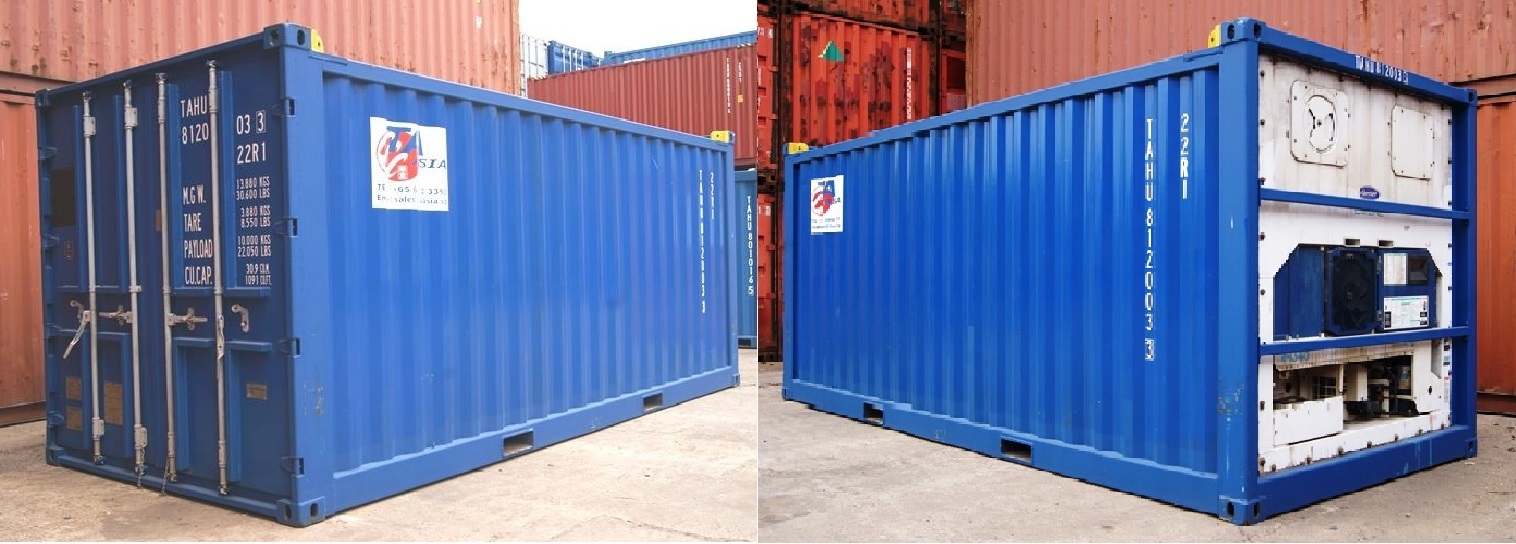
    20ft refrigerated reefer shipping container with refrigeration unit at the front end
    A 20ft refrigerated (reefer) container with its refrigeration unit at the front end.


    20ft Reefer Container Technical Specifications

    These are the specifications published on our 20ft Refrigerated Container (Reefer) product page. Exact specs for an individual unit are confirmed on your quote.

    Specification Imperial Metric
    Exterior (L x W x H) 20 ft 0 in x 8 ft 0 in x 8 ft 6 in 6.06 m x 2.44 m x 2.59 m
    Interior (L x W x H) 17 ft 8 in x 7 ft 5 in x 7 ft 5 in 5.44 m x 2.29 m x 2.29 m
    Door opening (W x H) 7 ft 5 in x 7 ft 3 in 2.26 m x 2.21 m
    Tare weight 6,780 lb 3,075 kg
    Max payload 60,470 lb 27,425 kg
    Cubic capacity 1,000 cu ft 28.3 cbm
    Temperature range -13°F to +77°F -25°C to +25°C
    Power requirement 380-460V, 3-phase (standard reefer plug)

    What the temperature range covers: -25°C to +25°C is suitable for frozen, chilled and climate-controlled storage. That makes one unit useful for frozen food, chilled produce, floral and nursery stock, and temperature-sensitive materials, from farm-to-market hauling to walk-in cold storage conversions.

    Reefer vs a dry container: the insulation and refrigeration machinery take up space, so interior volume is about 1,000 cubic feet versus about 1,165 for a standard 20ft dry container, and the empty weight is much higher (about 3,075 kg versus about 2,280 kg). In return you get active temperature control.

    Function-Tested Before It Ships: Our Reefer Inspection Standard

    A reefer is only as good as its refrigeration system, so this is the part to look at closely. Every 20ft reefer is function-tested before it leaves the depot, with the compressor, thermostat and door seals verified operational. You choose between two conditions:

    • New / one-trip: a like-new unit with a factory-fresh refrigeration unit, zero compressor cycles, full paint, and no dents or rust. It has made one ocean voyage.
    • Used, function-tested: compressor, thermostat and seals mechanically verified operational. Cosmetic wear such as surface rust and minor dents is graded and disclosed separately from mechanical condition, at meaningful savings over new. Used units have logged service hours, which is reflected in the price.

    Mechanical function and cosmetic condition are graded independently, so a unit can look worn but run well. We disclose both so you know exactly what you are buying. Ask us for the details of the specific unit you are considering, including the refrigeration unit make and model, before you order.

    Is a Reefer Right for You? Common Uses

    • Food and agriculture: frozen and chilled storage for producers, farm stands, caterers and restaurants.
    • Pharma and medical supplies: temperature-controlled storage where steady conditions matter. Confirm any regulatory requirements for your products.
    • Seasonal and event cold storage: extra capacity for peak periods without building a cold room.
    • Cold room conversions: a ready insulated shell for walk-in cold storage projects.

    Only need it for a season? Our 20ft refrigerated rental starts at $349 per month; see the 20ft reefer rental or compare with our reefer buying guide.

    REQUEST QUOTE: Order 20ft Refrigerated Containers Direct

    Tell us your ZIP code and whether you want new/one-trip or used function-tested. Request your quote →

    Reefer Buyer FAQs

    What are the electrical hookup requirements?

    The unit needs a 380-460V, 3-phase power source, connected through the standard reefer plug. Confirm that supply is available at your placement site before delivery, or budget for a portable generator. Units ship with the standard reefer plug, and a compatible power cord or cable can be added at checkout or sourced locally to suit your site. Have a qualified electrician confirm the connection.

    Can I run the reefer without external power during transport?

    No. Reefers need continuous power to hold temperature. For transport, a generator set (genset) or a reefer-equipped trailer with onboard power is required.

    Where can I place it?

    Choose a level, compacted surface (gravel, asphalt or concrete) rated for the unit’s loaded weight. Allow the footprint of a standard 20ft container plus room for the condenser unit to vent, and truck access for a tilt-bed or roll-off delivery. If you will use it for active cold storage, leave access for routine refrigeration maintenance. Our site preparation guide covers foundations and leveling.

    What controls does it have, and how do I set the temperature?

    The unit includes a thermostat, and we test it before shipping. The exact controller model depends on the individual unit, so ask us which controller your unit has and we will confirm it on your quote. Set the temperature within the unit’s -25°C to +25°C range and allow the box to reach temperature before loading product.

    New/one-trip or used: what is the difference?

    New/one-trip units have a factory-fresh compressor with zero run cycles. Used units are function-tested and verified operational but have logged service hours, reflected in the price.

    Can I finance or lease it?

    Yes. Financing and leasing options are available. Request a quote and our team will walk you through what is available for your business, or see our financing page.

    Request Your 20ft Reefer Quote

    Tell us your ZIP code and the condition you prefer, and we will confirm the delivered price and timing. You can also browse every refrigerated container we list, including 40ft high cube working and non-working units, or contact our team for a custom quote.

    REQUEST QUOTE: Order 20ft Refrigerated Containers Direct

    Instant freight and custom quote requests. Request your quote →

  • 40ft High Cube Shipping Container for Sale Direct: Specs, Grades and Freight Quote

    40ft High Cube Shipping Container for Sale Direct: Specs, Grades and Freight Quote

    Tall freight, racking systems and conversion projects run out of headroom long before they run out of floor space. A 40ft high cube gives you 2,694 cubic feet and 8 ft 10 in of usable interior height in one steel box. Buy it direct from our depot network: honest condition grading, a 12-point structural and watertight inspection on every unit, and no broker markup.

    GET A FREIGHT QUOTE: Order 40ft High Cube Containers Direct

    Listed from $4,795 for new/one-trip and cargo-worthy units. Nationwide delivery available. Get your quote →

    40ft High Cube shipping container, 9 ft 6 in tall, available new one-trip and used
    The 40ft High Cube: one extra foot of height over a standard 40ft container.


    40ft High Cube Specifications

    These are the specs published on our 40ft High Cube product page. Individual units vary slightly and exact specs are confirmed on your quote.

    Specification Imperial Metric
    Exterior (L x W x H) 40 ft 0 in x 8 ft 0 in x 9 ft 6 in 12.19 m x 2.44 m x 2.90 m
    Interior (L x W x H) 39 ft 5 in x 7 ft 8 in x 8 ft 10 in 12.03 m x 2.35 m x 2.69 m
    Door opening (W x H) 7 ft 8 in x 8 ft 5 in 2.34 m x 2.59 m
    Tare weight 8,598 lb 3,900 kg
    Max payload 58,600 lb 26,580 kg
    Cubic capacity 2,694 cu ft 76.3 cbm

    Why the extra foot matters: a standard 40ft box is 8 ft 6 in tall outside. The high cube is 9 ft 6 in, which gives you 8 ft 10 in of interior clearance for taller racking, bulkier freight, and conversions such as offices, workshops and pop-up retail where ceiling height changes what fits. At about 2,694 cubic feet, it holds roughly 2.3 times the volume of a 20ft container (about 1,165 cubic feet).

    Durability and Compliance: What You Are Actually Buying

    Shipping containers are built from weathering steel (commonly called Corten) designed to survive years of ocean transport and weather exposure. What separates one 40ft high cube from another is the grade, and we spell out each one:

    • New / one-trip: a single loaded ocean voyage, near-factory cosmetic condition, full paint, tight seals, and no dents or rust. Best for conversions, branded placements and resale.
    • Used, cargo worthy (CW): a multi-voyage unit, structurally and watertight certified for cargo re-use, with cosmetic wear expected. Best for buyers who need shipping-grade integrity on a budget.
    • Used, wind and watertight (WWT): weatherproof and structurally sound for static use, but not cargo re-certified. The lowest-cost option for storage-only jobs.

    Every unit passes our 12-point structural and watertight inspection before it is listed, with the results reflected honestly in its condition grade. If you plan to ship cargo in the container, choose cargo worthy or one-trip. If it will stay on your site, WWT is usually enough. Our container grades guide explains each grade in more detail.

    40ft High Cube Prices by Grade

    Listed prices at the time of writing, with cost per cubic foot based on 2,694 cubic feet of interior volume:

    Grade Listed price Cost per cu ft
    Economy (as-is) $1,825 $0.68
    Wind and watertight $1,975 $0.73
    Cargo worthy $2,325 $0.86
    Multi-trip $3,400 $1.26
    One-trip $3,600 $1.34
    New one-trip / cargo worthy (main listing) $4,795 $1.78

    Delivery is quoted separately based on the distance from the nearest depot to your site. Enter your ZIP on the quote tool and you get the exact price. Depot will-call pickup is also available at a lower price. We accept major credit cards and ACH or wire transfer, and offer financing through our checkout partners.

    Who Buys 40ft High Cubes, and Why

    • Builders and contractors: secure jobsite storage for long materials, with room for shelving and tall equipment.
    • Freight and warehouse managers: overflow storage and bulky or palletised cargo that benefits from the extra height.
    • Industrial operators: workshops, tool cribs and on-site storage where headroom allows racking.
    • Conversion projects: offices, workshops and retail pop-ups, where the extra foot is what makes the space comfortable.

    Buying instead of renting? Our 40ft high cube rentals start at $179 per month, and our renting vs. buying guide shows where the break-even falls.

    GET A FREIGHT QUOTE: Order 40ft High Cube Containers Direct

    Tell us your ZIP code and the grade you want. Get your quote →

    Buyer FAQs

    How do I prepare my site for delivery?

    Plan for a tilt-bed truck with a straight approach of 100 feet or more, or arrange an alternate offload in advance. The surface should be level and rated for point loads at all four corner castings. If you are converting on site, confirm where utilities come in before the container is placed, and check permit and zoning rules first, especially for occupied-use projects. Our site preparation guide and delivery process overview cover the details.

    How does ground-level tilt-bed unloading work?

    The truck bed tilts and slides the container backward onto the ground, so no crane or forklift is needed. That is why the straight approach distance and a firm, level surface matter: the driver needs room to pull forward as the container slides off.

    Can I modify a 40ft high cube?

    Yes. Our product page lists custom modifications such as roll-up doors, shelving and electrical work, and the extra headroom is the main reason high cubes are the usual choice for office, workshop and retail conversions. Cutting openings in the steel changes how the container carries load, so have structural changes done by qualified fabricators. Choose a one-trip unit when appearance and a clean shell matter.

    Can I pick it up myself?

    Depot will-call pickup is available and reflected as a lower price at checkout. You will need the truck and equipment to move a container that weighs about 3,900 kg (8,598 lb) empty.

    Order Your 40ft High Cube Direct

    If you need height, volume and a straight answer on condition, the 40ft high cube is the container to buy. Browse the full range of 40ft high cube containers, check our dimensions guide, or send us your ZIP code for a delivered price.

    GET A FREIGHT QUOTE: Order 40ft High Cube Containers Direct

    Instant quote, nationwide delivery available. Get your quote →

  • Buy a Used 20ft Shipping Container: Wind & Water Tight Specs, Price and Delivery

    Buy a Used 20ft Shipping Container: Wind & Water Tight Specs, Price and Delivery

    Need dry, secure storage without paying new-container prices? A used 20ft wind and watertight (WWT) shipping container is the value pick: it keeps your tools, stock, or equipment dry for thousands of dollars less than new. Buy direct from Container Depot Direct, with honest condition grading and no broker markup.

    20ft Wind & Water Tight container: $1,725 (price at time of writing). Delivered nationwide in the U.S.

    Check availability and get your quote →

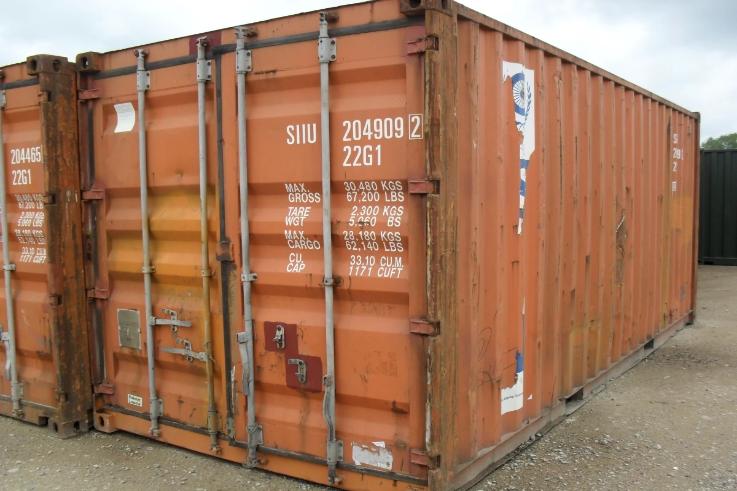
    Used 20ft wind and watertight shipping container for sale, side view showing corrugated steel walls and corner castings
    Used 20ft wind and watertight (WWT) shipping container — the grade built for on-site storage.

    Key Features & Specifications

    • Grade: Wind and watertight (WWT), weatherproof and structurally serviceable for stationary use.
    • Size: Standard 20ft container, about 19.3 ft long, 7.7 ft wide and 7.9 ft high inside.
    • Capacity: Roughly 1,165 cubic feet of interior volume (about 33 m³).
    • Max payload: Around 28,200 kg (about 62,000 lb) for a standard 20ft; typical figures, individual units vary slightly.
    • Condition: Cosmetic dents and surface rust are expected. The box keeps contents dry at a lower price point than cargo-worthy stock.
    • Price: $1,725 at the time of writing. Confirm the live price on the product page.
    • Delivery: Direct from our depot network, nationwide in the U.S. International export is also available.

    See full specs and current availability →

    Why Choose the 20ft Wind & Water Tight Container?

    It is the sweet spot between price and protection. You are paying for a sealed steel box that keeps rain and wind out, not for cosmetic perfection or an international shipping certification you will never use.

    • Lower cost per cubic foot than cargo worthy or new. At $1,725 for about 1,165 cubic feet, you are paying roughly $1.48 per cubic foot, versus about $1.67 for cargo worthy and $2.25 for one-trip.
    • Built for real-world jobs. Jobsite tool storage, business inventory and seasonal overflow, farm and ranch equipment, and backyard or yard storage.
    • Direct pricing. Delivered from our depot network with no broker markup and a straightforward quote process.
    • Owning beats renting for long-term needs. Our 20ft rentals start at $99 per month, so at that rate a $1,725 purchase equals roughly 17 months of rent, before delivery and pickup fees. If you need the box for more than about a year and a half, buying usually wins, and you keep an asset you can resell.

    Ready to buy? Tell us your ZIP code and we will confirm your delivered price and timing.

    Check availability and get your quote →

    How It Compares: 20ft Container Grades

    Here is how our standard 20ft grades stack up on price and cost per cubic foot (based on about 1,165 cubic feet of interior space; prices at time of writing):

    Grade Listed price Cost per cu ft Best for
    Economy (as-is) $1,177 $1.01 Lowest price; inspect before you buy
    Wind & Water Tight $1,725 $1.48 Dry, secure on-site storage
    Cargo Worthy $1,950 $1.67 Certified for shipping cargo
    Multi-Trip $2,475 $2.12 Cleaner look, still WWT
    One-Trip $2,625 $2.25 Near-new condition

    Bottom line: if the container stays on your property, WWT gives you the protection you need at a better price than the grades above it. For a plain-English breakdown of every grade, see our container grades guide.

    Buyer FAQs: Your Top Concerns, Answered

    Will it really keep my stuff dry?
    That is exactly what the wind and watertight grade means: sealed against rain and wind, so contents stay dry. Expect dents and surface rust on the outside; that is cosmetic. Ask us for current photos of the actual unit before you buy.

    Can I ship cargo overseas in a WWT container?
    Not necessarily. WWT is meant for stationary use. If you plan to ship goods in the container, choose cargo worthy with a valid CSC plate instead.

    What will delivery cost, and are there hidden fees?
    Delivery depends on distance from the depot to your address. We confirm the delivered cost and timing in your quote, so you see the full number up front. Check your site against our delivery requirements first: a 20ft container typically needs about 60 feet of straight, clear space, firm level ground, and 16 feet of overhead clearance.

    Can I finance it?
    Yes, see our financing options.

    Order Direct and Get Your 20ft Container

    A used 20ft wind and watertight container gives you dry, secure storage at one of the lowest prices per cubic foot we offer. Order direct, skip the broker markup, and get a delivered price for your address.

    Get yours today: $1,725 for the 20ft Wind & Water Tight container.

    Check availability and get your quote →

    Not sure which size or grade fits? Browse the full shop, review the dimensions guide, or contact our team for a quote.

  • Shipping Container for Rent Near Me: Monthly Costs, Delivery and What to Ask

    Shipping Container for Rent Near Me: Monthly Costs, Delivery and What to Ask

    If you only need a container for a few months — a renovation, a jobsite, seasonal inventory, or simply to test whether one works for your business — renting makes more sense than buying. “Shipping container for rent near me” is the search most people start with, so here is what monthly rental really costs, what is usually included, and what to ask before you sign.

    How Much Does It Cost to Rent a Shipping Container?

    Rates vary by size, condition, term length and location. Our current rental listings start at:

    These are starting monthly rates. The final price depends on the condition grade, how long you rent, and your delivery location, and is confirmed when you request a quote. For context, a 2026 market guide from Pacific Mobile Storage reports monthly rates of about $75–$120 for a 20ft container month-to-month, lower on a 12-month term, about $450–$950 for refrigerated units, and delivery fees from roughly $100 to $400 or more, with coastal metro areas running 30–40 percent above the national average.

    Why “Near Me” Matters Less Than the Delivered Price

    A container is not something you pick up on the way home. It is delivered and collected by truck, so distance affects the delivery and pickup charges rather than the monthly rate itself. When you compare rentals, add up the monthly rate, the delivery fee, the pickup fee and any minimum term. A cheap monthly rate with high delivery charges can cost more than a slightly higher rate with delivery handled in the process. For our rentals, tell us your ZIP code when you request a quote and we will confirm delivery cost and timing.

    What Condition Will My Rental Container Be?

    Condition varies between providers, so ask. Our rental units are the same real condition grades we sell — cargo worthy, wind and watertight, or new/one-trip depending on availability. If you are not sure what those terms mean, read our container grades guide.

    Rent or Buy? A Rough Break-Even

    As a very rough illustration, a 20ft wind and watertight container listed at about $1,725 would equal roughly 17 months of rent at $99 per month, and an economy-grade 20ft at about $1,177 would equal roughly 12 months, before delivery and pickup fees on either side. If you will need the box for longer than a year or so, buying is usually cheaper, and a purchased container keeps resale value. If your need is under six months or uncertain, renting avoids the capital outlay. Our renting vs. buying guide goes deeper, and our general container rental overview covers common uses.

    Questions to Ask Before You Rent

    1. What is the all-in monthly cost? Include delivery, pickup, taxes and any fees.
    2. What is the minimum term? Month-to-month is flexible but can cost more per month than a 12-month term.
    3. What condition grade is the container? Ask for photos of the actual unit.
    4. Is a deposit required, and when is it returned?
    5. Can I modify it? Adding locks, shelving or vents may be allowed; cutting doors or windows usually is not on a rental. Always ask first.
    6. What happens if I need it longer or want to return it early?
    7. Who is responsible for damage, and is the container insured?
    8. How long until delivery? Timing depends on inventory and trucking availability in your area.

    Prepare Your Site Before Delivery

    Rental containers arrive by the same tilt-bed or flatbed trucks used for sales, so the same site rules apply: roughly 60 feet of straight clear space for a 20ft unit and 100–120 feet for a 40ft, at least 10 feet of width and 16 feet of overhead clearance, firm level ground, and a gentle slope (see this site access guide). Our site preparation guide and delivery process overview cover the details. Check any local permit or HOA rules before you schedule.

    Common Uses for Rental Containers

    • Jobsite tool and material storage during construction
    • Seasonal inventory for retail and e-commerce
    • Home renovation, moving, or decluttering
    • Event and festival equipment
    • Temperature-controlled storage using a reefer
    • Trying out a container before committing to buy

    Frequently Asked Questions

    Can I rent a container for just one month?
    Month-to-month rentals are widely available, though longer terms usually lower the monthly rate. Tell us your expected duration when you request a quote.

    Is delivery included?
    We handle delivery to your address as part of the process; the delivery cost and timing are confirmed in your quote based on your ZIP code.

    Can I rent a refrigerated container?
    Yes, a 20ft working reefer rental is available from $349 per month.

    Can I turn a rental into a purchase?
    Ask us. If you decide a container suits your project, our shop lists containers for sale, and our financing options can help spread the cost.

    Request a Rental Quote

    Choose the size above, tell us your ZIP code and how long you need it, and we will confirm availability, the monthly rate, and delivery. You can also browse the full shop, see where we deliver, or contact our team.

  • Shipping Containers for Sale Near Me: How to Compare Sellers and Get One Delivered

    Shipping Containers for Sale Near Me: How to Compare Sellers and Get One Delivered

    “Shipping containers for sale near me” is one of the most common searches in the container business, and it is also one of the most misleading. Containers are heavy steel boxes that cost real money to move, so the “near” part matters — but not in the way most buyers expect. This guide explains what “near me” really means for price and delivery, how to compare sellers, and how to get a container to your site without surprises.

    What “Near Me” Actually Means When Buying a Container

    Unlike a retail store, you rarely drive to pick up a container. Most buyers have it delivered by truck, so what matters is the distance between the depot holding the container and your delivery address. According to a 2026 industry pricing guide from YES Containers, local delivery within roughly 100 miles typically runs about $450–$750, while 200–350 miles often runs about $900–$2,100, and longer hauls are quoted individually. Proximity to a major port (the guide cites Newark, Houston, Long Beach, Savannah and Charleston) also tends to mean lower base prices and wider selection.

    That is why two sellers advertising the same container can have very different “all-in” prices at your address. The container price is only half of the number you care about.

    How Buying From Container Depot Direct Works

    We sell containers by size and condition and arrange delivery to your address. Rather than guessing at delivery costs, send us your ZIP code or delivery location and we will confirm the delivered price and timing. You can browse current sizes, grades and listed prices in our shop, check how delivery is handled on our delivery page, and see where we serve on the locations page or the location finder.

    At the time of writing, 20ft containers in our shop start from about $1,177 (economy grade) and go up to about $2,625 (one-trip), while 40ft high cubes run from about $1,825 to about $3,600. Prices change with the steel and freight markets, so confirm the live number before you decide.

    A Buyer’s Checklist for Comparing Local Sellers

    Whether you buy from us or anyone else, run every nearby seller through the same checklist:

    1. Get the delivered price in writing. Ask for container plus delivery plus any fees, to your exact address.
    2. Confirm the grade. New (one-trip), cargo worthy, wind and watertight, and as-is are very different products. Our container grades guide explains each.
    3. Ask for photos of the actual container. Look at the roof, door seals, floor and corners. Stock photos are not the unit you will receive.
    4. Check for a CSC plate if you will ship cargo in it. Storage-only buyers can skip this; shippers cannot.
    5. Ask about delivery timing and truck type. Tilt-bed delivery is common; your site needs to suit it.
    6. Understand the terms. Deposits, payment methods, cancellation and return policies should be clear before you pay.
    7. Beware of prices that look too good. A very low sticker price often means a hidden delivery fee or a rougher grade.

    Will a Container Truck Fit at My Site?

    This is the question that catches buyers out. Delivery guidance from container suppliers (for example this site access guide) generally calls for:

    • About 60 feet of straight, clear space to deliver a 20ft container, and roughly 100–120 feet for a 40ft.
    • At least 10 feet of width and 16 feet of overhead clearance (watch tree branches, power lines, eaves and signs).
    • Firm, level ground such as gravel, asphalt, concrete or hard-packed soil, and not soft mud or wet grass.
    • A slope no steeper than about 4 percent.
    • Enough turning room for a long truck, including gate widths and tight corners.

    If your site is tight, say so when you ask for a quote. For foundations and leveling, see our site preparation guide, and for what happens on delivery day, read the delivery process overview.

    Pickup, Delivery, or Both?

    Most buyers choose delivery. Self-pickup is only practical if you own a suitable truck or trailer and the right equipment to load and unload a steel box that weighs thousands of pounds, which is why it is uncommon. Whichever you choose, make sure the quote states who is responsible for unloading and what happens if the driver cannot reach your placement spot.

    Do I Need a Permit?

    Possibly. Rules vary by city and county, and also depend on whether the container is temporary storage or something more permanent such as an office or workshop. Check local zoning, HOA rules and any setback requirements before you order, not after the truck arrives.

    Paying for It

    If you would rather spread the cost, see our financing options. And if your need is short-term, compare buying against renting in our renting vs. buying guide.

    Frequently Asked Questions

    Can I see the container before I buy?
    Ask for current photos of the exact unit, and ask whether in-person inspection is possible at the depot. For any container you cannot inspect, buy from a seller that clearly states the grade and what it means.

    How fast can a container be delivered?
    It depends on inventory, distance and trucking availability. Give us your ZIP code and we will confirm timing along with the delivered price.

    Is the nearest seller always the cheapest?
    Not necessarily. A seller a little farther away with a better grade or lower base price can still be cheaper once delivery is included. Compare the full delivered cost.

    What size should I buy?
    For most storage jobs a 20ft container is the practical choice; use our cost and pricing guide and dimensions guide to decide.

    Get a Delivered Price for Your Address

    Tell us the size and grade you are considering and where it needs to go, and we will come back with the delivered price. Start in the shop or contact our team.

  • Shipping Container Buying Guide: The Most-Searched Keywords of 2026, Explained

    Shipping Container Buying Guide: The Most-Searched Keywords of 2026, Explained

    If you are shopping for a shipping container, the words you type into Google say a lot about what you actually need. A search for “20ft container for sale” is a very different job from “40ft high cube container dimensions” or “container rental near me”. This guide walks through the most-searched shipping container keywords we see in our own Search Console data, explains what each one really means, and points you to the right option.

    What Container Buyers Are Searching For

    Looking at the queries that bring people to Container Depot Direct, five themes dominate. They are listed here roughly in order of volume:

    1. 20ft container searches (for sale, dimensions, reefer, dry, climate controlled, cargo worthy). This is the single largest group, which fits: 20ft is the standard size for storage, jobsites, and shipping.
    2. 10ft container searches (“10ft container for sale”, “10ft shipping container dimensions”). Smaller than you would expect to be so popular, and a sign that many buyers have tight yards or want something one person can place easily.
    3. Refrigerated (reefer) container searches, including rental and “20ft reefer containers for sale”.
    4. Dimension and spec searches (“20ft container dimensions in cm”, “40 foot high cube container dimensions”).
    5. Location searches (“shipping container near me”, plus city names such as Houston, Toronto, Brisbane, and Adelaide).

    Behind almost every one of these is the same set of questions: what size, what condition, what does it cost, and how does it get to me. The rest of this post answers each in turn.

    Keyword 1: “20ft Shipping Container” — the Default Choice

    A standard 20ft container measures about 19.3 ft long, 7.7 ft wide and 7.9 ft high inside, with roughly 1,165 cubic feet of space and a maximum payload of around 28,200 kg (about 62,000 lb). It is the most common size because it is easy to deliver on a standard tilt-bed or roll-off truck, fits most residential and commercial lots, and holds a surprising amount: roughly a one-bedroom apartment’s worth of furniture, or a full jobsite’s tools and materials.

    At the time of writing, 20ft containers in our shop range from our economy grade (from about $1,177) through wind and watertight, cargo worthy, multi-trip, and one-trip units (about $2,625). Prices change with the steel and freight markets, so always confirm on the live shop page.

    Keyword 2: “40ft High Cube Container” — Maximum Space

    A 40ft high cube (40HC) is the same width as a standard container but twice the length and a foot taller: about 39.5 ft long and 8.9 ft high inside, around 2,685 cubic feet of volume, and a payload close to 28,600 kg. Choose a 40HC when you need long, tall, or bulky storage, plan to convert the unit into an office or workshop (the extra height helps once you add insulation and a ceiling), or want the lowest cost per cubic foot.

    Our 40ft high cube listings currently run from economy grade at about $1,825 to one-trip units at about $3,600, with refrigerated and side-door versions priced higher.

    Keyword 3: “Container Dimensions” — Know Your Numbers Before You Buy

    Dimension searches are some of the most common queries we see, and for good reason: the details matter. Here is a quick reference based on the ISO 668 standard sizes most containers follow:

    Spec 20ft Standard 40ft Standard 40ft High Cube
    Internal length 5,896 mm (19.3 ft) 12,032 mm (39.5 ft) 12,032 mm (39.5 ft)
    Internal width 2,350 mm (7.7 ft) 2,350 mm (7.7 ft) 2,350 mm (7.7 ft)
    Internal height 2,393 mm (7.9 ft) 2,393 mm (7.9 ft) 2,697 mm (8.9 ft)
    Internal volume 33 m³ (1,165 cu ft) 67 m³ (2,366 cu ft) 76 m³ (2,685 cu ft)
    Tare weight 2,280 kg 3,700 kg 3,880 kg
    Max payload 28,200 kg 28,800 kg 28,620 kg

    Figures are typical; individual units vary slightly by manufacturer. For the door opening, exterior footprint, and more sizes, see our full container dimensions guide before you measure your site.

    Keyword 4: “10ft Container for Sale” — Small Footprint, Honest Trade-offs

    Interest in 10ft containers is strong, and it makes sense for small lots, backyards, and sites where a larger truck cannot maneuver. One honest note: plain 10ft storage containers are much less common on the used market than 20ft and 40ft units. Our current 10ft listings are converted units (a 10ft office and a 10ft scale house) rather than standard storage boxes. If all you need is secure storage, a 20ft container is usually the better value per cubic foot and far easier to source in volume. If you truly need a smaller footprint, contact our team and we will tell you what is realistically available in your area.

    Keyword 5: “Cargo Worthy”, “Wind and Watertight” and Other Grades

    Condition terms are among the most misunderstood in the industry. Here is what they generally mean:

    • New / one-trip: built overseas, used once to ship cargo, and delivered with minimal wear. Best appearance and longest lifespan.
    • IICL: meets International Institute of Container Lessors standards for structural soundness and repair quality.
    • Cargo worthy (CW): inspected and certified for international shipping, with a valid CSC plate, no holes, and weather-tight seals.
    • Wind and watertight (WWT): sealed against rain and wind, ideal for on-site storage, but not guaranteed to be approved for shipping cargo overseas.
    • As-is / economy: sold in current condition without repairs. Lowest price, with more cosmetic wear, so inspect before you commit.

    If the container will stay on your property, wind and watertight is usually the sweet spot. If you plan to ship goods in it, you need cargo worthy with a current CSC plate.

    Keyword 6: “Container Rental Near Me” — Rent Instead of Buy

    Not every project needs a purchase. Rentals suit short jobs, seasonal inventory, renovations, and events. Our rental listings start at $99 per month for a 20ft container, with 40ft, 40ft high cube, open-side, and 20ft refrigerated options also available. See the 20ft container rental page for details. If you will need the container for more than a year or two, buying generally works out cheaper.

    Keyword 7: “Reefer Container” — Refrigerated Storage

    Reefers are insulated, temperature-controlled containers used for food, pharmaceuticals, and anything temperature sensitive. You will see two forms for sale: working reefers with an operating refrigeration unit, and non-working reefers sold as insulated boxes (useful for cold storage conversions or as well-insulated general storage). Prices are considerably higher than dry containers. At the time of writing, our 40ft high cube non-working reefer is listed around $5,850 and the working unit around $7,950, with 20ft working units also available. Make sure you know which type you are buying.

    What Does a Shipping Container Really Cost in 2026?

    Industry pricing guides published in 2026 put used 20ft containers at roughly $1,400–$2,000, new (one-trip) 20ft units at roughly $2,100–$3,400, and new 40ft high cubes at roughly $2,900–$4,600, with used containers typically 50–65% cheaper than new (YES Containers). Prices move with steel costs, freight rates, seasonal demand (spring and summer are busiest), and proximity to major ports.

    The container is only part of the bill. Delivery is usually quoted separately: the same pricing guide shows local delivery within about 100 miles in the $450–$750 range, rising to roughly $900–$2,100 at 200–350 miles. Our delivery page explains how we quote your site, and our financing options can spread the cost out.

    Keyword 8: “Shipping Containers Near Me” — Why Location Matters

    Searches that include a city name (Houston, Toronto, Brisbane, Adelaide, and many others) reflect a practical truth: container price, availability, and delivery cost all depend on where you are. Inland buyers pay more for transport; port cities often have lower base prices and more inventory. We serve many US cities plus international destinations, each with its own delivery and customs considerations. Browse our locations page or use the location finder to see what applies to your area.

    How to Choose: a Quick Decision Guide

    • General storage on your own property: 20ft wind and watertight (best value) or cargo worthy (a cleaner unit).
    • Maximum space or a conversion project: 40ft high cube.
    • Tight site: check what 10ft options exist, or consider whether a 20ft will actually fit your access route.
    • Shipping goods overseas: cargo worthy with a valid CSC plate.
    • Short-term need: rent instead of buy.
    • Temperature-sensitive goods: reefer (working) or an insulated non-working unit.

    Frequently Asked Questions

    What is the cheapest way to buy a shipping container?
    An economy-grade (as-is) used container is the lowest-priced option, but you should inspect it for rust, door function, and floor condition, since it is sold without repairs.

    Is a 40ft container twice the price of a 20ft?
    No. A 40ft has double the length for typically much less than double the cost, which is why it often has the lowest cost per cubic foot.

    Do I need a permit to place a container on my property?
    It depends on your city and county, and on whether you are using it for storage or as a structure. Check local zoning and building rules before you order.

    How is the container delivered?
    Usually by a tilt-bed or roll-off truck, which needs a level, firm surface and clearance to maneuver. See our FAQ for more on site preparation.

    Ready to Pick Your Container?

    Browse current sizes, grades, and prices in our shop, check the dimensions guide, or contact our team for a quote on delivery to your location.

  • Shipping Containers for Backyard Studios & She-Sheds

    Shipping Containers for Backyard Studios & She-Sheds

    A backyard studio doesn’t need to be a full container home to be worth building — a single 10ft or 20ft container, finished simply, makes a genuinely nice personal space for a home office, art studio, gym, or just a room that’s entirely yours.

    Shipping container backyard studio
    A finished container studio brings a genuinely nice personal space into a backyard.

    Sizing a backyard studio

    A 10ft container fits a small desk-and-chair studio or a compact gym in yards where space is tight. A 20ft container gives enough room for a proper art studio, a home office with a meeting nook, or a small guest studio — see our dimensions page to plan the layout.

    Insulation and comfort matter most here

    Because a backyard studio is meant to be comfortable, not just weatherproof, insulation and climate control aren’t optional the way they might be for pure storage — see our insulation guide and climate control guide before finalizing a build.

    Making it feel like a real room

    Windows bring in natural light that makes a studio feel far less like a box, and exterior finishing touches go a long way too — see our landscaping & curb appeal guide for ideas that apply just as well to a small studio as a full home build.

    Permits for a backyard structure

    Even a small studio can trigger permitting requirements depending on your municipality and whether it has plumbing or permanent power — check our zoning & permits guide before you build.

    Start your studio build

    Browse our cabin & small container models or ask about a simple insulated shell sized for your yard.

  • Climate-Controlled Shipping Containers for Sale

    Climate-Controlled Shipping Containers for Sale

    Standard containers handle weather just fine, but anything temperature-sensitive — electronics, certain retail inventory, paper records, or people working inside for full days — needs real climate control, not just a sealed steel box.

    Climate controlled shipping container for sale
    A climate-controlled unit combines insulation and HVAC to hold a stable interior temperature.

    What “climate-controlled” actually includes

    Our 40ft climate-controlled storage unit pairs insulation with a small HVAC system, so interior temperature stays stable regardless of outside conditions rather than just staying dry. This is a meaningfully different product than a standard storage container with vents added.

    Business and inventory uses

    Climate control matters most for business inventory that degrades with temperature swings, and for any records or electronics storage where humidity and heat cause real damage over time, not just cosmetic wear.

    Building your own from a standard container

    If you’d rather start with a standard container and add climate control yourself, see our insulation guide and heating & cooling guide for how to spec insulation and a mini-split unit for your specific use case.

    Cold storage is a different product

    If you actually need refrigeration-level cold rather than comfort temperatures, that’s a working reefer, not a climate-controlled unit — see our reefer guide for the distinction.

    Get a climate-controlled container

    Browse portable storage units or ask about adding climate control to any container order.

  • Mobile & Towable Shipping Containers for Sale

    Mobile & Towable Shipping Containers for Sale

    Some containers stay put for years; others need to move between fields, job sites, or seasonal locations on a regular basis. If that’s your use case, a gooseneck-ready container is worth setting up from the start rather than arranging a tilt-bed truck every time it needs to relocate.

    Mobile shipping container ready for towing
    A gooseneck tunnel lets a container ride low enough for towing behind a pickup truck.

    Why gooseneck-ready matters for frequent moves

    A standard container needs a tilt-bed truck or a crane to relocate, which means scheduling and paying for transport every time. A container modified with a gooseneck tunnel sits low enough to tow directly behind a pickup with a gooseneck hitch, which is a real advantage for farms, ranches, and contractors who move a container between sites several times a season.

    Best fits for a towable setup

    This modification makes the most sense for equipment and tool storage that travels with a job, seasonal farm storage that moves between fields, and any small business that sets up temporary operations in different locations throughout the year. See our farm storage guide and construction site guide for related use cases.

    What the modification involves

    A gooseneck tunnel is a structural cutout and reinforcement package, not a simple bolt-on — see our modifications guide for how structural cuts like this are properly reinforced to keep the container sound after the cut.

    Towing and transport basics

    See our moving & transporting guide for what to check before towing a container yourself, including load securing and site access at both ends of the move.

    Order a gooseneck-ready container

    Ask about adding a gooseneck tunnel to a new container order, or retrofitting one you already own.