
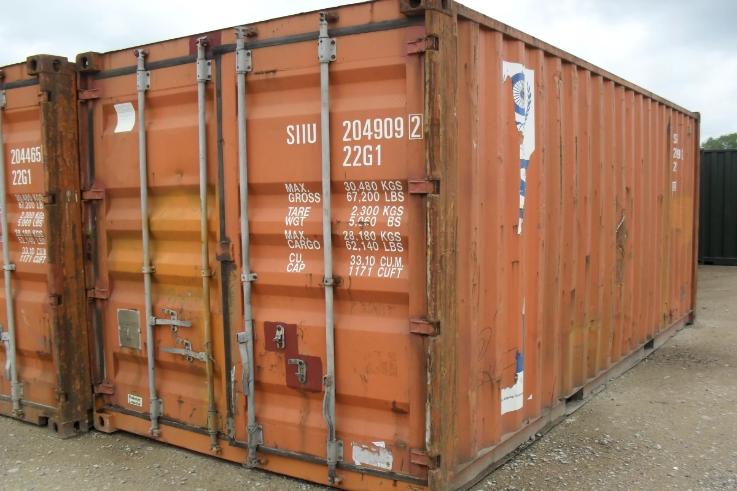
Swing-out cargo doors are great for shipping and terrible for daily use. They are heavy, they need a wide arc of clearance, and the locking bars are awkward when you open the container ten times a day. That is why one of the most common upgrades buyers make is swapping or supplementing the factory doors, and why searches like “no weld shipping container door” keep growing. This guide explains the realistic door options, how roll-up doors are framed, what a no-weld approach does and does not mean, and which accessories you need so the opening seals, locks and drains properly.
Quick answer: if you open the container often, a roll-up door gives faster access and needs no swing clearance. If you need a walk-in personnel door, a framed steel door in a cut opening works. Either way, the opening has to be reinforced, because cutting a corrugated steel wall removes structure. Browse our roll-up door or our shipping container door.
Why change the doors on a shipping container?
A standard container is built to be lifted, stacked and locked closed for weeks at sea. A workshop, shop, or storage unit has different needs. Typical reasons people change or add doors include:
- Frequent access: a roll-up door opens vertically in seconds, so tools, stock or equipment come in and out faster.
- Tight sites: swing doors need room in front of the container. A roll-up door only needs the clear space where you stand.
- Weather control: a properly fitted door and threshold limit blown rain and dust compared with an old, worn gasket.
- Walk-in access: offices, cabins and workshops need a normal-height entry point rather than a full cargo door.
- Extra openings: a second door in the long side turns one box into two separately accessed spaces.
Door options at a glance
| Option | Best for | Main trade-off |
|---|---|---|
| Factory cargo doors (as delivered) | Long-term storage, shipping, highest security | Slow to open, needs swing clearance |
| Roll-up door in the end opening | Frequent loading, tight sites, retail and trade use | Needs correct framing; lower security than locked cargo bars unless fitted with a quality lock |
| Roll-up door in a side opening | Access along the long wall, two-compartment layouts | Requires cutting the wall and reinforcing the opening |
| Steel personnel door | Offices, cabins, workshops | Requires cut opening, frame and weatherproofing |
| Side-door / double-door containers | Buyers who want the extra opening built in | Choose it at purchase; no cutting later |
If you would rather avoid cutting steel yourself, consider buying a container that already has the openings you need. Our side door options and 20ft roll-up door storage unit are examples of a factory-prepared approach, and the 40ft roll-up door storage unit does the same on a longer box.
How roll-up doors are fitted to a container
A roll-up door does not simply bolt into the corrugated end. The standard container door opening is roughly 7 ft 8 in wide and 7 ft 6 in tall on a standard-height container, and about 8 ft 5 in tall on a high cube. The door frame, header and threshold have to match that opening, and the end structure around it must stay rigid. The usual build has three parts:
- Framing: a steel frame is fitted inside the opening so the door has a flat, square surface to mount against. Our roll-up door framing kit is sold for exactly this job.
- Header plate: the top of the opening needs a plate so the door’s coil housing mounts securely. See the 7 ft wide roll-up door header plate.
- Threshold plate: the bottom edge needs a flat sill so the door seals to the floor and water runs away from the opening. See the roll-up door threshold plate.
Check each product page for sizing, and ask us to confirm that components match the container you plan to buy before you order. Fit varies by container height and by whether you keep or remove the original doors.
What does “no weld” actually mean?
People searching for a no-weld shipping container door usually want to add or change a door without hiring a welder or burning through paint and corrugation with a torch. Several third-party makers sell bolt-in or clamp-on kits for this purpose. We want to be straight about what that means in practice:
- No-weld is a fastening method, not a structural shortcut. The kit may attach with bolts, clamps or sealant instead of welds, but a cut opening still needs to be framed and supported.
- Cutting is still cutting. Removing a section of corrugated side wall reduces stiffness, especially in 20ft boxes with a lot removed. Many no-weld approaches handle this with an added frame; follow the kit maker’s instructions exactly.
- We do not currently list a dedicated no-weld door kit. Our doors and framing components are described on their product pages. If a bolt-in approach matters to you, mention it when you request a quote and we will say plainly what we can supply.
For a one-off door in a container you own, bolt-in kits can be a reasonable DIY route. If the container will be stacked, lifted by its corner castings with a heavy load, or shipped again, have a qualified fabricator review the opening first. Our container modifications guide walks through cut sizes, framing and what each change does to the structure, and our grades guide explains why a sound, dent-free starting box matters before you cut anything.
Not sure which door fits your container?
Accessories that finish the job
Doors are only part of the opening. The rest of the details decide whether the container stays dry and secure:
- Windows and window shutters for light and security in an office or workshop.
- Vents to reduce condensation. See our ventilation and condensation guide.
- A lock box that shields the padlock from bolt cutters. Our security guide covers lock choice and placement.
- An office kit if the container becomes a workspace, plus the electrical wiring guide.
The full list is on our shipping container accessories page, which also answers the broader “container accessories” search.
Step-by-step: planning a door upgrade
- Decide the use. Daily loading calls for a roll-up door; occasional access can stay on cargo doors.
- Choose the container first. Pick the size and condition grade, then design the opening around it.
- Measure the existing opening. Do not rely on a generic number. Measure width, height and square.
- Order framing, header and threshold components together. Matching parts avoid gaps.
- Level the container. A twisted box makes a roll-up door bind. Read our foundation and site preparation guide first.
- Seal and test. Run a hose along the threshold and check inside for leaks before loading valuable items.
- Check local rules. Permanent modifications can affect permits; see the zoning and permits guide.
Frequently asked questions
Can I add a roll-up door to any shipping container?
In most cases yes, but the opening must be framed correctly and the container should be structurally sound. Cargo-worthy and wind and water tight containers are the usual starting point because the walls are solid and the floor is intact.
Is a roll-up door as secure as the original cargo doors?
Not by default. Factory cargo doors with locking bars are very hard to defeat. A roll-up door can be made secure with a good lock and a lock box, but security depends on the door build and how you lock it.
Do I need a welder to install a container door?
Not always. Some third-party kits fasten with bolts or clamps instead of welds. A welded frame is still the most common approach for permanent, load-bearing openings.
Do you deliver doors and accessories with the container?
We deliver nationwide in the U.S. and quote accessories alongside your container order so everything arrives together. Ask for details when you request your quote.
Next step
Pick the container, pick the opening, and match the components. Start with the complete product guide if you are still choosing a container, or go straight to a roll-up door and framing kit and ask for a single quote.
Ready to price the container, door and accessories together?
Laisser un commentaire