
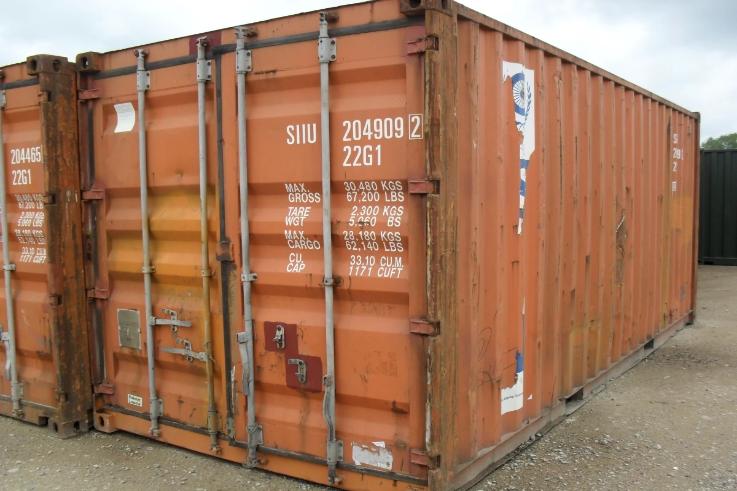
If you are shopping for a shipping container, the words you type into Google say a lot about what you actually need. A search for “20ft container for sale” is a very different job from “40ft high cube container dimensions” or “container rental near me”. This guide walks through the most-searched shipping container keywords we see in our own Search Console data, explains what each one really means, and points you to the right option.
What Container Buyers Are Searching For
Looking at the queries that bring people to Container Depot Direct, five themes dominate. They are listed here roughly in order of volume:
- 20ft container searches (for sale, dimensions, reefer, dry, climate controlled, cargo worthy). This is the single largest group, which fits: 20ft is the standard size for storage, jobsites, and shipping.
- 10ft container searches (“10ft container for sale”, “10ft shipping container dimensions”). Smaller than you would expect to be so popular, and a sign that many buyers have tight yards or want something one person can place easily.
- Refrigerated (reefer) container searches, including rental and “20ft reefer containers for sale”.
- Dimension and spec searches (“20ft container dimensions in cm”, “40 foot high cube container dimensions”).
- Location searches (“shipping container near me”, plus city names such as Houston, Toronto, Brisbane, and Adelaide).
Behind almost every one of these is the same set of questions: what size, what condition, what does it cost, and how does it get to me. The rest of this post answers each in turn.
Keyword 1: “20ft Shipping Container” — the Default Choice
A standard 20ft container measures about 19.3 ft long, 7.7 ft wide and 7.9 ft high inside, with roughly 1,165 cubic feet of space and a maximum payload of around 28,200 kg (about 62,000 lb). It is the most common size because it is easy to deliver on a standard tilt-bed or roll-off truck, fits most residential and commercial lots, and holds a surprising amount: roughly a one-bedroom apartment’s worth of furniture, or a full jobsite’s tools and materials.
At the time of writing, 20ft containers in our shop range from our economy grade (from about $1,177) through wind and watertight, cargo worthy, multi-trip, and one-trip units (about $2,625). Prices change with the steel and freight markets, so always confirm on the live shop page.
Keyword 2: “40ft High Cube Container” — Maximum Space
A 40ft high cube (40HC) is the same width as a standard container but twice the length and a foot taller: about 39.5 ft long and 8.9 ft high inside, around 2,685 cubic feet of volume, and a payload close to 28,600 kg. Choose a 40HC when you need long, tall, or bulky storage, plan to convert the unit into an office or workshop (the extra height helps once you add insulation and a ceiling), or want the lowest cost per cubic foot.
Our 40ft high cube listings currently run from economy grade at about $1,825 to one-trip units at about $3,600, with refrigerated and side-door versions priced higher.
Keyword 3: “Container Dimensions” — Know Your Numbers Before You Buy
Dimension searches are some of the most common queries we see, and for good reason: the details matter. Here is a quick reference based on the ISO 668 standard sizes most containers follow:
| Spec | 20ft Standard | 40ft Standard | 40ft High Cube |
|---|---|---|---|
| Internal length | 5,896 mm (19.3 ft) | 12,032 mm (39.5 ft) | 12,032 mm (39.5 ft) |
| Internal width | 2,350 mm (7.7 ft) | 2,350 mm (7.7 ft) | 2,350 mm (7.7 ft) |
| Internal height | 2,393 mm (7.9 ft) | 2,393 mm (7.9 ft) | 2,697 mm (8.9 ft) |
| Internal volume | 33 m³ (1,165 cu ft) | 67 m³ (2,366 cu ft) | 76 m³ (2,685 cu ft) |
| Tare weight | 2,280 kg | 3,700 kg | 3,880 kg |
| Max payload | 28,200 kg | 28,800 kg | 28,620 kg |
Figures are typical; individual units vary slightly by manufacturer. For the door opening, exterior footprint, and more sizes, see our full container dimensions guide before you measure your site.
Keyword 4: “10ft Container for Sale” — Small Footprint, Honest Trade-offs
Interest in 10ft containers is strong, and it makes sense for small lots, backyards, and sites where a larger truck cannot maneuver. One honest note: plain 10ft storage containers are much less common on the used market than 20ft and 40ft units. Our current 10ft listings are converted units (a 10ft office and a 10ft scale house) rather than standard storage boxes. If all you need is secure storage, a 20ft container is usually the better value per cubic foot and far easier to source in volume. If you truly need a smaller footprint, contact our team and we will tell you what is realistically available in your area.
Keyword 5: “Cargo Worthy”, “Wind and Watertight” and Other Grades
Condition terms are among the most misunderstood in the industry. Here is what they generally mean:
- New / one-trip: built overseas, used once to ship cargo, and delivered with minimal wear. Best appearance and longest lifespan.
- IICL: meets International Institute of Container Lessors standards for structural soundness and repair quality.
- Cargo worthy (CW): inspected and certified for international shipping, with a valid CSC plate, no holes, and weather-tight seals.
- Wind and watertight (WWT): sealed against rain and wind, ideal for on-site storage, but not guaranteed to be approved for shipping cargo overseas.
- As-is / economy: sold in current condition without repairs. Lowest price, with more cosmetic wear, so inspect before you commit.
If the container will stay on your property, wind and watertight is usually the sweet spot. If you plan to ship goods in it, you need cargo worthy with a current CSC plate.
Keyword 6: “Container Rental Near Me” — Rent Instead of Buy
Not every project needs a purchase. Rentals suit short jobs, seasonal inventory, renovations, and events. Our rental listings start at $99 per month for a 20ft container, with 40ft, 40ft high cube, open-side, and 20ft refrigerated options also available. See the 20ft container rental page for details. If you will need the container for more than a year or two, buying generally works out cheaper.
Keyword 7: “Reefer Container” — Refrigerated Storage
Reefers are insulated, temperature-controlled containers used for food, pharmaceuticals, and anything temperature sensitive. You will see two forms for sale: working reefers with an operating refrigeration unit, and non-working reefers sold as insulated boxes (useful for cold storage conversions or as well-insulated general storage). Prices are considerably higher than dry containers. At the time of writing, our 40ft high cube non-working reefer is listed around $5,850 and the working unit around $7,950, with 20ft working units also available. Make sure you know which type you are buying.
What Does a Shipping Container Really Cost in 2026?
Industry pricing guides published in 2026 put used 20ft containers at roughly $1,400–$2,000, new (one-trip) 20ft units at roughly $2,100–$3,400, and new 40ft high cubes at roughly $2,900–$4,600, with used containers typically 50–65% cheaper than new (YES Containers). Prices move with steel costs, freight rates, seasonal demand (spring and summer are busiest), and proximity to major ports.
The container is only part of the bill. Delivery is usually quoted separately: the same pricing guide shows local delivery within about 100 miles in the $450–$750 range, rising to roughly $900–$2,100 at 200–350 miles. Our delivery page explains how we quote your site, and our financing options can spread the cost out.
Keyword 8: “Shipping Containers Near Me” — Why Location Matters
Searches that include a city name (Houston, Toronto, Brisbane, Adelaide, and many others) reflect a practical truth: container price, availability, and delivery cost all depend on where you are. Inland buyers pay more for transport; port cities often have lower base prices and more inventory. We serve many US cities plus international destinations, each with its own delivery and customs considerations. Browse our locations page or use the location finder to see what applies to your area.
How to Choose: a Quick Decision Guide
- General storage on your own property: 20ft wind and watertight (best value) or cargo worthy (a cleaner unit).
- Maximum space or a conversion project: 40ft high cube.
- Tight site: check what 10ft options exist, or consider whether a 20ft will actually fit your access route.
- Shipping goods overseas: cargo worthy with a valid CSC plate.
- Short-term need: rent instead of buy.
- Temperature-sensitive goods: reefer (working) or an insulated non-working unit.
Frequently Asked Questions
What is the cheapest way to buy a shipping container?
An economy-grade (as-is) used container is the lowest-priced option, but you should inspect it for rust, door function, and floor condition, since it is sold without repairs.
Is a 40ft container twice the price of a 20ft?
No. A 40ft has double the length for typically much less than double the cost, which is why it often has the lowest cost per cubic foot.
Do I need a permit to place a container on my property?
It depends on your city and county, and on whether you are using it for storage or as a structure. Check local zoning and building rules before you order.
How is the container delivered?
Usually by a tilt-bed or roll-off truck, which needs a level, firm surface and clearance to maneuver. See our FAQ for more on site preparation.
Ready to Pick Your Container?
Browse current sizes, grades, and prices in our shop, check the dimensions guide, or contact our team for a quote on delivery to your location.
Leave a Reply