🚚 Ready to order today? Use code SHIPTODAY50 for $50 off any order — no signup needed. Shop Now

Blog

  • Shipping Container Accessories for Sale: Ramps, Shelving & Security Add-Ons

    Shipping Container Accessories for Sale: Ramps, Shelving & Security Add-Ons

    A standard container is already secure and weatherproof, but the right add-ons make it dramatically more functional, whether you’re outfitting it for storage, a business, or a full conversion.

    Shipping container accessories for sale
    From security to storage efficiency, container accessories solve specific, common problems.

    Access and loading

    A loading ramp makes moving pallets, equipment, or a hand truck in and out of a container dramatically easier than working through a standard door threshold — especially useful for business and job-site containers with frequent access.

    Organization

    A shelving & racking kit turns empty volume into organized, usable storage, which matters most for business inventory containers where finding things quickly saves real time.

    Security

    A lock box is the standard first upgrade for any unsupervised container, and a solar security camera & motion light kit adds deterrence without needing hardwired power. See our full security guide for how these work together.

    Moisture and climate control

    Desiccant packs protect sensitive stored goods, while a mini-split HVAC unit is the standard choice for an occupied conversion — see our climate control guide for sizing.

    Windows, vents & doors

    Browse windows, vents, and window shutters to finish out a conversion, or see our full accessories catalog for everything currently available.
  • Small Shipping Containers for Sale: 10ft Options for Tight Spaces

    Small Shipping Containers for Sale: 10ft Options for Tight Spaces

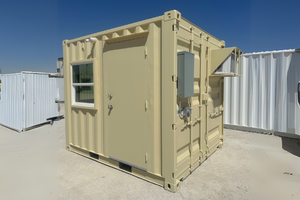
    Not every lot has room for a 20ft container, and not every project needs one. If you’re working with a narrow side yard, a small urban property, or just don’t need that much capacity, a 10ft container is worth a look before you rule out owning one entirely.

    Small 10ft shipping container for sale
    A 10ft container’s small footprint fits sites a larger unit simply can’t.

    Who a 10ft container fits best

    Homeowners with limited yard space, small businesses needing a modest amount of secure inventory storage, and anyone converting a single-purpose small structure (a compact office, a scale house, a garden shed alternative) are the most common buyers. See our 10ft container guide for a full breakdown of typical uses and pricing.

    What’s available

    Browse our 10ft standard container for purchase, or our 10ft rental if you’re not ready to commit to buying. Both fit sites and budgets a full-size container doesn’t.

    Delivery considerations for tight sites

    Because 10ft containers are exactly the size buyers choose for tight-access sites, delivery trucks generally have an easier time maneuvering them into place than a 20ft or 40ft unit — but clearance still matters. See our delivery process guide before confirming a drop location.

    Sizing up if you’re unsure

    If your storage needs might grow, compare against our full storage sizing guide before committing — it’s usually cheaper to buy the right size once than to add a second small container later.

    Get a quote

    Check delivery availability or reach out for current 10ft pricing and lead times.

  • Shipping Container Landscaping & Curb Appeal Ideas

    Shipping Container Landscaping & Curb Appeal Ideas

    A container conversion can look like a genuine small building or like a box someone dropped in a yard, and the difference usually comes down to a handful of finishing touches around the exterior rather than anything structural.

    Shipping container cabin with landscaping
    Siding, trim, and a deck turn a container into something that reads as a small building.

    Paint and siding do the heaviest lifting

    A fresh coat of paint in a color that isn’t shipping-line orange or blue immediately changes how a container reads, and adding siding over the corrugated steel — wood, metal panel, or composite — goes even further toward making it look residential. See our roofing options guide for how roof style pairs with exterior finish choices.

    A deck or porch changes the whole approach

    Adding a small deck or covered porch at the entry does more for curb appeal than almost any other single addition — it breaks up the box shape, gives visitors a transition space, and is relatively simple to build since it doesn’t attach structurally to the container itself in most designs.

    Skirting the base

    A raised container on piers or blocks (see our foundation guide) often benefits from skirting around the base — lattice, stone veneer, or landscaping timbers — to hide the gap underneath and tie the structure visually to the ground.

    Planting around the container

    Low shrubs, raised planter beds, or a simple gravel border along the base softens the hard edges of a steel structure more than people expect. Keep plantings a foot or two back from the walls so you’re not trapping moisture against the steel — see our maintenance guide for why that matters for rust prevention.

    Related reading

    See our homes & cabins for sale and backyard studio ideas for finished examples of these details in practice.

  • Shipping Container Cleaning & Interior Prep Before Move-In

    Shipping Container Cleaning & Interior Prep Before Move-In

    A container fresh off a delivery truck — especially a used one — usually needs some cleanup before it’s ready for sensitive storage or a conversion build-out. Here’s what that typically involves.

    Clean shipping container interior ready for use
    A cleaned, dry interior is worth checking before storing anything moisture-sensitive.

    Odors from prior cargo

    Used containers can carry faint odors from whatever they last shipped — this is usually cosmetic and fades with airflow, but a stronger or chemical smell is worth investigating before storing food, textiles, or anything else that absorbs odor easily. Leaving the doors open with fans running for a day or two before move-in resolves most cases.

    Surface rust and residue

    Light surface rust on the floor’s steel cross-members or interior seams is cosmetic and doesn’t need treatment for basic storage use, but if you’re finishing the interior for a conversion, a wire brush and a rust-inhibiting primer on any exposed spots is cheap insurance against it spreading under new wall finishes. See our lifespan & maintenance guide for ongoing rust prevention.

    Floor cleaning and sealing

    Sweep out any residual dunnage, debris, or old strapping, then check the plywood floor for soft spots before sealing or covering it — see our flooring guide for sealing options and when the floor needs more than a clean.

    Checking seals and door hardware

    Confirm door gaskets are intact and the locking bars move freely — a dry, cracked gasket lets in moisture that undoes any interior prep work you’ve done. This is also a good time to add a lock box if the container doesn’t already have one.

    Before you store anything moisture-sensitive

    Once the interior is clean and dry, add desiccant packs for an extra layer of protection — see our ventilation guide for the bigger picture on moisture control.

  • Moving & Transporting a Shipping Container: What to Know

    Moving & Transporting a Shipping Container: What to Know

    Buying a container and relocating one you already own are two different logistics problems. Initial delivery is handled by the seller’s truck and driver, but moving a container again later — to a new property, or to a different spot on the same lot — is something owners often have to arrange themselves.

    Shipping container ready for transport
    A container’s corner castings are also its lifting and tie-down points during transport.

    How containers are typically moved

    Most container transport uses a tilt-bed truck, which lowers its bed to ground level, winches the container on, and lifts back to a driving position — no crane needed for a straightforward move on solid ground. For sites where a full-size delivery truck can’t maneuver, a smaller flatbed with a forklift or a rented crane may be needed instead.

    Gooseneck trailer towing

    For an owner who wants to move a container themselves rather than hiring transport each time, a gooseneck tunnel modification lets the container sit low enough on a gooseneck trailer to tow behind a pickup truck. This is popular for farm and mobile job-site containers that relocate more than once.

    What to check before a move

    Confirm the container is empty or that contents are secured — an unsecured load shifting during transport can damage both the contents and the container’s interior. Check that all doors are locked and, if the container has been modified with windows or cutouts, confirm those openings are structurally sound enough to handle the stress of lifting and transport; see our structural guide for how modifications affect a container’s rigidity.

    Access and clearance at the new site

    The same clearance rules that apply to original delivery apply to a relocation — see our delivery process guide for truck access requirements, and prepare the new site the same way you would for a first delivery, per our foundation & site prep guide.

    Get help planning a move

    Whether you’re buying a container that will need to relocate later or already own one, reach out for guidance on the right transport setup for your situation.

  • Shipping Container Climate Control: Heating & Cooling Options

    Shipping Container Climate Control: Heating & Cooling Options

    Steel holds heat and cold far more aggressively than a stick-framed wall, so climate control for a container conversion isn’t optional the way it might be for a garden shed — it’s what makes the space usable more than a few weeks a year.

    Climate controlled shipping container
    A climate-controlled container keeps interior temperature stable regardless of the season.

    Insulation comes first

    Before choosing any heating or cooling equipment, get the container insulated — running HVAC in an uninsulated steel box means fighting a losing battle against a wall that transfers outside temperature almost instantly. See our insulation options guide for R-values and methods before sizing equipment.

    Ductless mini-splits: the standard choice

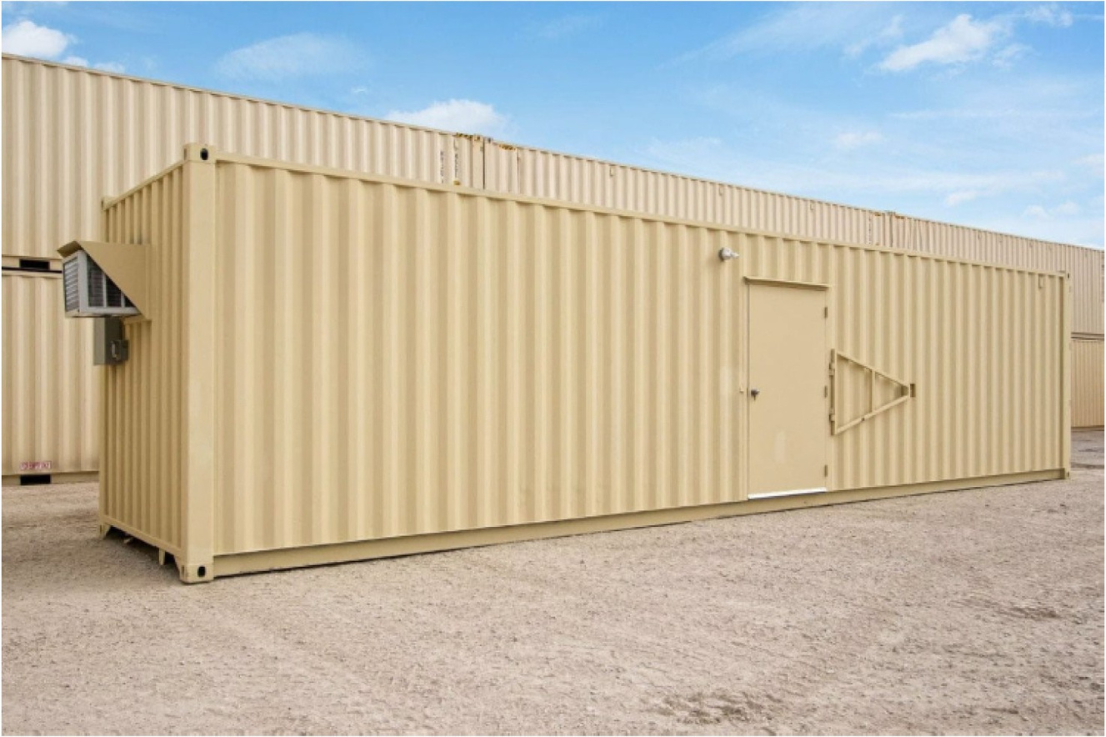
    A ductless mini-split is the most common climate control solution for container offices, cabins, and workshops, since it needs no ductwork — just a wall-mounted indoor unit connected to an outdoor compressor. Sizing depends on square footage and insulation quality; a well-insulated 20ft container typically needs less capacity than an equivalent uninsulated space.

    Portable and window units

    For temporary or budget setups, a portable AC unit or a through-wall window unit can work, though neither is as efficient or as clean-looking as a mini-split. These make more sense for a job-site container used seasonally than for a permanent conversion.

    Working reefers: purpose-built cold storage

    If the goal is genuine cold storage rather than comfort cooling, a working reefer container is a completely different, purpose-built system rather than a retrofit — see our reefer buying guide for how that equipment differs from a comfort-cooling mini-split.

    Powering climate control equipment

    Mini-splits and window units both need a dedicated circuit sized to their draw — see our electrical wiring guide for how this is typically planned alongside insulation and general power needs.

    Related reading

    See our farm storage guide and workshop guide for use-case-specific climate control needs.

  • 10ft Shipping Containers: Uses, Pricing & When They Make Sense

    10ft Shipping Containers: Uses, Pricing & When They Make Sense

    Not every storage or conversion project needs a full 20ft or 40ft container. A 10ft container gives you the same steel security and weather resistance in roughly half the footprint of a 20ft unit, which makes it worth considering whenever space, budget, or delivery access is tight.

    10ft shipping container conversion
    A 10ft container’s compact footprint fits sites where a 20ft or 40ft unit won’t.

    How much space does a 10ft container actually give you

    A 10ft container offers roughly 80 square feet of interior floor space — enough for a motorcycle, a season’s worth of yard equipment, a small workshop bench, or overflow inventory for a small business. It’s also short enough to fit in spots a 20ft container can’t, like a narrow side yard or a small urban lot.

    Common uses for a 10ft container

    Beyond basic storage, 10ft containers get modified into small scale houses, compact site offices, and single-purpose utility rooms surprisingly often, since the smaller shell is cheaper to insulate and finish than a larger one. See our 10ft standard container for current specs, or our 10ft rental option if you only need it short-term.

    Pricing compared to larger sizes

    A 10ft container costs less than a 20ft container, but not exactly half as much — smaller containers don’t scale linearly since manufacturing and delivery overhead stay fairly fixed regardless of length. See our cost & pricing guide for how this plays out across sizes, and our storage sizing guide to compare capacity per dollar.

    When to size up instead

    If you’re not sure a 10ft container will be enough, it usually makes sense to size up rather than buy two small units later — a single 20ft container is almost always more cost-effective than two 10ft containers for the same total capacity. See exact dimensions before deciding.

    Get a 10ft container quote

    Check delivery availability for a 10ft unit in your area, or ask about financing through our financing options.

  • Shipping Container Pop-Up Shops & Retail Kiosks for Sale

    Shipping Container Pop-Up Shops & Retail Kiosks for Sale

    A container storefront turns heads precisely because it doesn’t look like a typical retail box, and it comes with a practical advantage too: the structure, security, and weather protection are already built in, so the build-out is mostly about the customer-facing finish.

    Open side shipping container for retail kiosk conversion
    An open-side container converts easily into a walk-up service window or display storefront.

    Open-side and double-door layouts

    Our open side / double door container replaces most of one wall with wide door openings, which is the layout most pop-up shops and service windows are built around — it lets customers see and access the interior directly rather than through a single standard door.

    What a retail build-out typically adds

    Beyond the base container, most retail conversions add a service counter or walk-up window, display windows, insulation and a small HVAC unit for staff comfort, and exterior finish work (siding, signage mounts, paint) to match a brand. See our modifications guide for the full range of what’s structurally possible.

    Permitting a retail placement

    Retail and food-service placements typically face more scrutiny than storage or job-site containers, especially in commercial zones or shared parking lots. Check with your local planning department early — see our zoning & permits guide for the questions to ask before committing to a location.

    Mobile vs. permanent placement

    Some pop-up concepts move between locations or seasons, which favors a rented container over a purchased one — see our renting vs. buying guide. A permanent storefront location generally favors buying and finishing a container outright.

    Start your retail build

    Browse open-side & double-door containers or ask about combining a build-out with financing through our financing options.

  • Shipping Containers for Agricultural & Farm Storage: Sizes & Add-Ons

    Shipping Containers for Agricultural & Farm Storage: Sizes & Add-Ons

    Farms deal with a wider range of storage needs than almost any other property type — equipment, feed, chemicals, and sometimes perishable produce — and a shipping container’s combination of security and weather resistance fits almost all of them.

    Refrigerated shipping container for farm produce storage
    A working reefer container gives a farm on-site cold storage during harvest without a walk-in cooler build.

    Equipment and feed storage

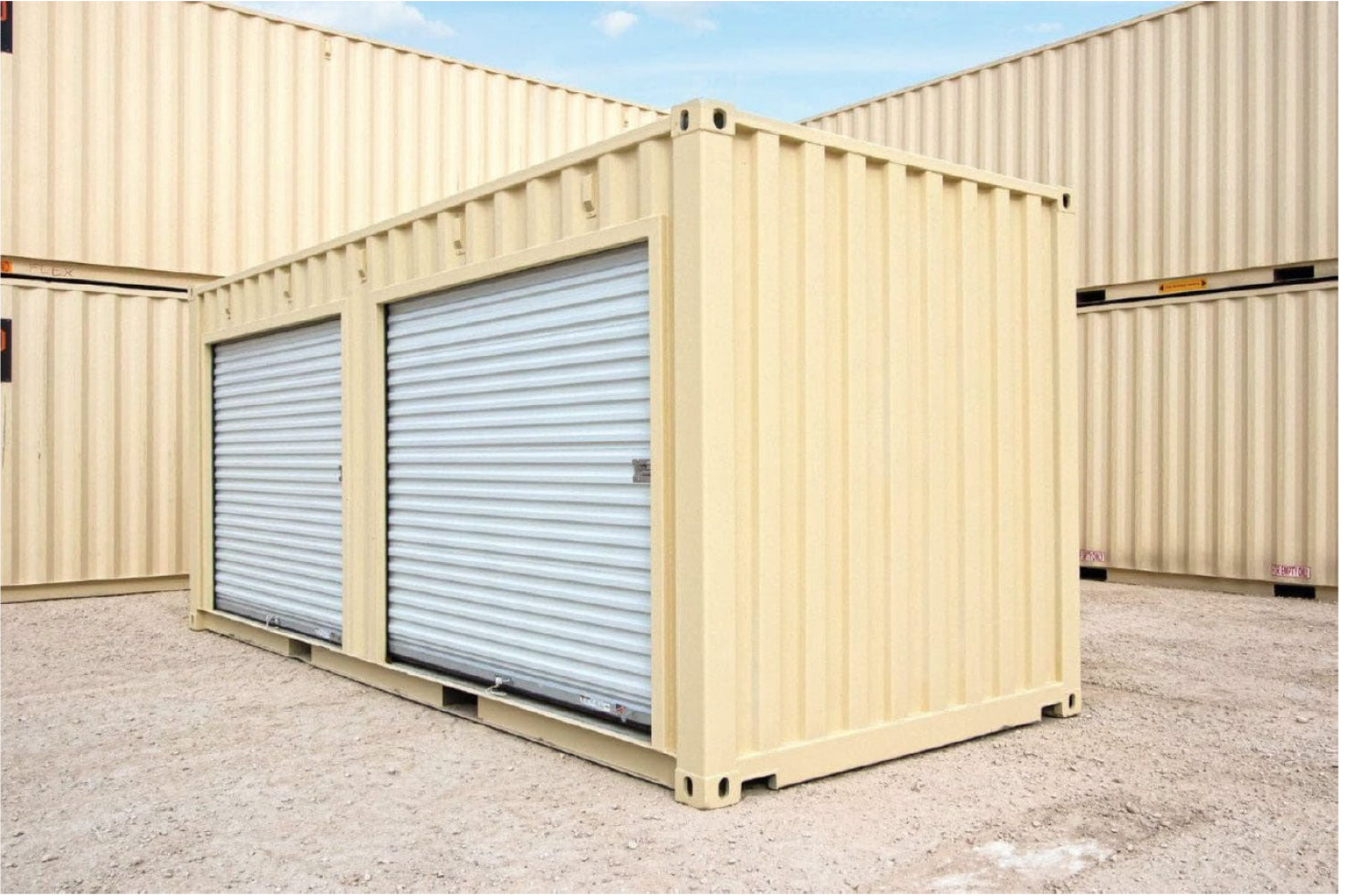
    A 40ft container keeps tractors’ attachments, hand tools, and equipment secure and dry between seasons, while feed and chemical storage benefit from the same sealed, rodent-proof structure that makes containers useful for any dry-goods storage. A roll-up door unit makes loading feed bags or moving equipment in and out far easier than standard swing doors.

    Cold storage for produce

    During harvest, a working reefer container gives a farm on-site cold storage for produce without the capital cost of building a walk-in cooler — see our reefer buying guide for power requirements and pricing.

    Placement on farm and ranch land

    Rural properties usually have more flexibility on placement and fewer neighbors to consider, but delivery access still matters — confirm truck clearance to the intended spot per our delivery process guide, especially for containers headed to a field or pasture rather than a driveway.

    Weatherproofing and ventilation

    For anything stored long-term through humid or freezing seasons, add vents to prevent condensation damage to feed, seed, or equipment — see our ventilation guide for why this matters even in a sealed steel structure.

    Get containers delivered to your property

    Browse refrigerated and standard storage containers, or check delivery to your area.

  • Shipping Container Workshops & Garages for Sale: Setup Options

    Shipping Container Workshops & Garages for Sale: Setup Options

    A container workshop gives you a lockable, weatherproof workspace for woodworking, mechanics, or general fabrication without the cost of a stick-built garage — and unlike a garage, it can be relocated later if your needs change.

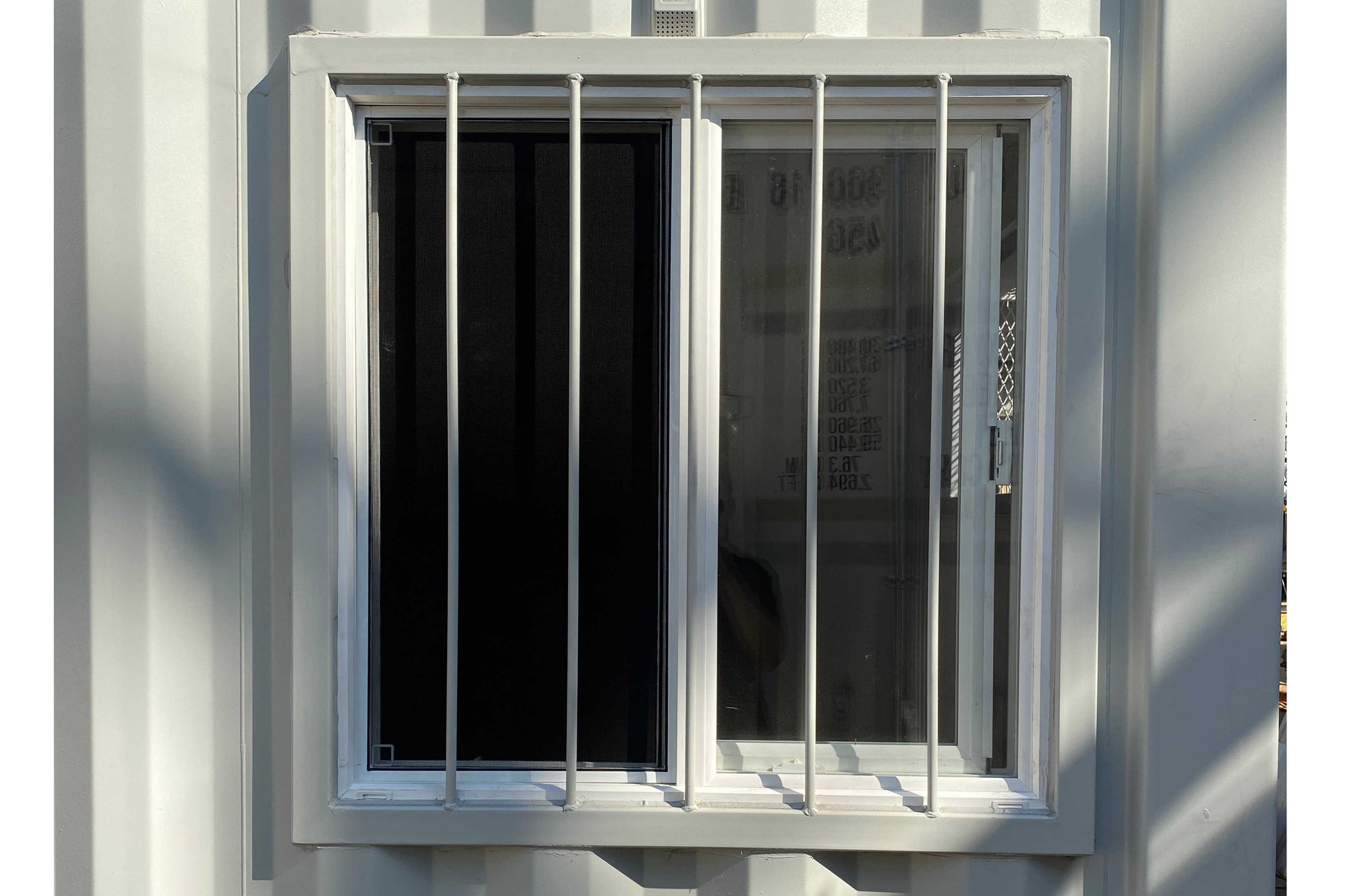
    Shipping container window for a workshop conversion
    Security-barred windows bring natural light into a workshop without sacrificing security.

    Sizing your workshop

    A 20ft container gives enough room for a single-bay workshop — a workbench, wall-mounted tool storage, and space to move around a project. A 40ft or 40ft high cube container roughly doubles that, enough for a small vehicle bay alongside a dedicated bench area. See exact dimensions before deciding.

    Light and ventilation

    Unlike storage containers, a workshop benefits from natural light and airflow. Windows with security bars bring in daylight without giving up the container’s inherent security, and adding vents or an exhaust fan matters even more here than in storage use, since workshops generate heat, fumes, and dust that need somewhere to go. See our ventilation guide for setting this up properly.

    Power for tools and equipment

    Workshops typically need more circuits and higher amperage than a simple office conversion, especially for 220V equipment like table saws or welders. Plan your electrical service around your heaviest tool’s draw — see our electrical wiring guide for how service panels and circuits are typically run in a container.

    Insulation for year-round use

    If you’ll use the workshop through cold or hot months, insulate it the same as you would an office — see our insulation guide for options that fit a workshop budget.

    Start your build

    Browse base container options to convert, or ask about combining a roll-up door, windows, and insulation into a single custom workshop order.