🚚 Ready to order today? Use code SHIPTODAY50 for $50 off any order — no signup needed. Shop Now

Category: Container Sizes & Specs

  • 40ft High Cube Shipping Container for Sale Direct: Specs, Grades and Freight Quote

    40ft High Cube Shipping Container for Sale Direct: Specs, Grades and Freight Quote

    Tall freight, racking systems and conversion projects run out of headroom long before they run out of floor space. A 40ft high cube gives you 2,694 cubic feet and 8 ft 10 in of usable interior height in one steel box. Buy it direct from our depot network: honest condition grading, a 12-point structural and watertight inspection on every unit, and no broker markup.

    GET A FREIGHT QUOTE: Order 40ft High Cube Containers Direct

    Listed from $4,795 for new/one-trip and cargo-worthy units. Nationwide delivery available. Get your quote →

    40ft High Cube shipping container, 9 ft 6 in tall, available new one-trip and used
    The 40ft High Cube: one extra foot of height over a standard 40ft container.


    40ft High Cube Specifications

    These are the specs published on our 40ft High Cube product page. Individual units vary slightly and exact specs are confirmed on your quote.

    Specification Imperial Metric
    Exterior (L x W x H) 40 ft 0 in x 8 ft 0 in x 9 ft 6 in 12.19 m x 2.44 m x 2.90 m
    Interior (L x W x H) 39 ft 5 in x 7 ft 8 in x 8 ft 10 in 12.03 m x 2.35 m x 2.69 m
    Door opening (W x H) 7 ft 8 in x 8 ft 5 in 2.34 m x 2.59 m
    Tare weight 8,598 lb 3,900 kg
    Max payload 58,600 lb 26,580 kg
    Cubic capacity 2,694 cu ft 76.3 cbm

    Why the extra foot matters: a standard 40ft box is 8 ft 6 in tall outside. The high cube is 9 ft 6 in, which gives you 8 ft 10 in of interior clearance for taller racking, bulkier freight, and conversions such as offices, workshops and pop-up retail where ceiling height changes what fits. At about 2,694 cubic feet, it holds roughly 2.3 times the volume of a 20ft container (about 1,165 cubic feet).

    Durability and Compliance: What You Are Actually Buying

    Shipping containers are built from weathering steel (commonly called Corten) designed to survive years of ocean transport and weather exposure. What separates one 40ft high cube from another is the grade, and we spell out each one:

    • New / one-trip: a single loaded ocean voyage, near-factory cosmetic condition, full paint, tight seals, and no dents or rust. Best for conversions, branded placements and resale.
    • Used, cargo worthy (CW): a multi-voyage unit, structurally and watertight certified for cargo re-use, with cosmetic wear expected. Best for buyers who need shipping-grade integrity on a budget.
    • Used, wind and watertight (WWT): weatherproof and structurally sound for static use, but not cargo re-certified. The lowest-cost option for storage-only jobs.

    Every unit passes our 12-point structural and watertight inspection before it is listed, with the results reflected honestly in its condition grade. If you plan to ship cargo in the container, choose cargo worthy or one-trip. If it will stay on your site, WWT is usually enough. Our container grades guide explains each grade in more detail.

    40ft High Cube Prices by Grade

    Listed prices at the time of writing, with cost per cubic foot based on 2,694 cubic feet of interior volume:

    Grade Listed price Cost per cu ft
    Economy (as-is) $1,825 $0.68
    Wind and watertight $1,975 $0.73
    Cargo worthy $2,325 $0.86
    Multi-trip $3,400 $1.26
    One-trip $3,600 $1.34
    New one-trip / cargo worthy (main listing) $4,795 $1.78

    Delivery is quoted separately based on the distance from the nearest depot to your site. Enter your ZIP on the quote tool and you get the exact price. Depot will-call pickup is also available at a lower price. We accept major credit cards and ACH or wire transfer, and offer financing through our checkout partners.

    Who Buys 40ft High Cubes, and Why

    • Builders and contractors: secure jobsite storage for long materials, with room for shelving and tall equipment.
    • Freight and warehouse managers: overflow storage and bulky or palletised cargo that benefits from the extra height.
    • Industrial operators: workshops, tool cribs and on-site storage where headroom allows racking.
    • Conversion projects: offices, workshops and retail pop-ups, where the extra foot is what makes the space comfortable.

    Buying instead of renting? Our 40ft high cube rentals start at $179 per month, and our renting vs. buying guide shows where the break-even falls.

    GET A FREIGHT QUOTE: Order 40ft High Cube Containers Direct

    Tell us your ZIP code and the grade you want. Get your quote →

    Buyer FAQs

    How do I prepare my site for delivery?

    Plan for a tilt-bed truck with a straight approach of 100 feet or more, or arrange an alternate offload in advance. The surface should be level and rated for point loads at all four corner castings. If you are converting on site, confirm where utilities come in before the container is placed, and check permit and zoning rules first, especially for occupied-use projects. Our site preparation guide and delivery process overview cover the details.

    How does ground-level tilt-bed unloading work?

    The truck bed tilts and slides the container backward onto the ground, so no crane or forklift is needed. That is why the straight approach distance and a firm, level surface matter: the driver needs room to pull forward as the container slides off.

    Can I modify a 40ft high cube?

    Yes. Our product page lists custom modifications such as roll-up doors, shelving and electrical work, and the extra headroom is the main reason high cubes are the usual choice for office, workshop and retail conversions. Cutting openings in the steel changes how the container carries load, so have structural changes done by qualified fabricators. Choose a one-trip unit when appearance and a clean shell matter.

    Can I pick it up myself?

    Depot will-call pickup is available and reflected as a lower price at checkout. You will need the truck and equipment to move a container that weighs about 3,900 kg (8,598 lb) empty.

    Order Your 40ft High Cube Direct

    If you need height, volume and a straight answer on condition, the 40ft high cube is the container to buy. Browse the full range of 40ft high cube containers, check our dimensions guide, or send us your ZIP code for a delivered price.

    GET A FREIGHT QUOTE: Order 40ft High Cube Containers Direct

    Instant quote, nationwide delivery available. Get your quote →
  • Small Shipping Containers for Sale: 10ft Options for Tight Spaces

    Small Shipping Containers for Sale: 10ft Options for Tight Spaces

    Not every lot has room for a 20ft container, and not every project needs one. If you’re working with a narrow side yard, a small urban property, or just don’t need that much capacity, a 10ft container is worth a look before you rule out owning one entirely.

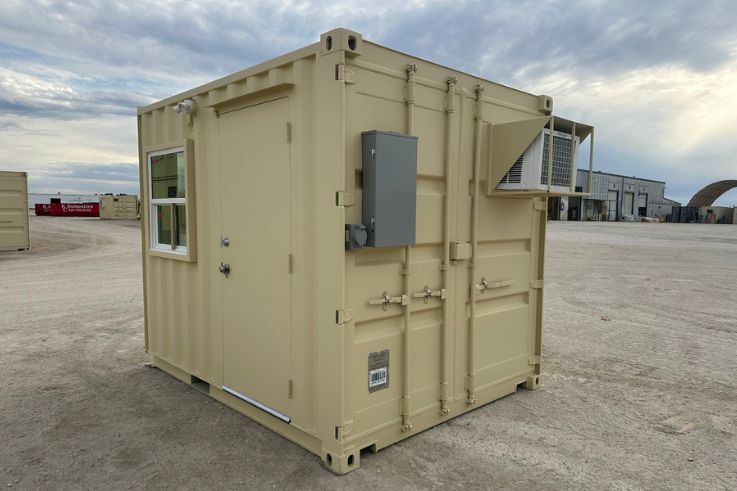
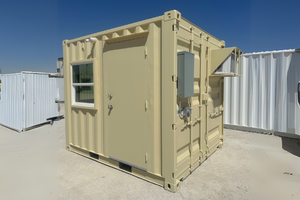
    Small 10ft shipping container for sale
    A 10ft container’s small footprint fits sites a larger unit simply can’t.

    Who a 10ft container fits best

    Homeowners with limited yard space, small businesses needing a modest amount of secure inventory storage, and anyone converting a single-purpose small structure (a compact office, a scale house, a garden shed alternative) are the most common buyers. See our 10ft container guide for a full breakdown of typical uses and pricing.

    What’s available

    Browse our 10ft standard container for purchase, or our 10ft rental if you’re not ready to commit to buying. Both fit sites and budgets a full-size container doesn’t.

    Delivery considerations for tight sites

    Because 10ft containers are exactly the size buyers choose for tight-access sites, delivery trucks generally have an easier time maneuvering them into place than a 20ft or 40ft unit — but clearance still matters. See our delivery process guide before confirming a drop location.

    Sizing up if you’re unsure

    If your storage needs might grow, compare against our full storage sizing guide before committing — it’s usually cheaper to buy the right size once than to add a second small container later.

    Get a quote

    Check delivery availability or reach out for current 10ft pricing and lead times.

  • 10ft Shipping Containers: Uses, Pricing & When They Make Sense

    10ft Shipping Containers: Uses, Pricing & When They Make Sense

    Not every storage or conversion project needs a full 20ft or 40ft container. A 10ft container gives you the same steel security and weather resistance in roughly half the footprint of a 20ft unit, which makes it worth considering whenever space, budget, or delivery access is tight.

    10ft shipping container conversion
    A 10ft container’s compact footprint fits sites where a 20ft or 40ft unit won’t.

    How much space does a 10ft container actually give you

    A 10ft container offers roughly 80 square feet of interior floor space — enough for a motorcycle, a season’s worth of yard equipment, a small workshop bench, or overflow inventory for a small business. It’s also short enough to fit in spots a 20ft container can’t, like a narrow side yard or a small urban lot.

    Common uses for a 10ft container

    Beyond basic storage, 10ft containers get modified into small scale houses, compact site offices, and single-purpose utility rooms surprisingly often, since the smaller shell is cheaper to insulate and finish than a larger one. See our 10ft standard container for current specs, or our 10ft rental option if you only need it short-term.

    Pricing compared to larger sizes

    A 10ft container costs less than a 20ft container, but not exactly half as much — smaller containers don’t scale linearly since manufacturing and delivery overhead stay fairly fixed regardless of length. See our cost & pricing guide for how this plays out across sizes, and our storage sizing guide to compare capacity per dollar.

    When to size up instead

    If you’re not sure a 10ft container will be enough, it usually makes sense to size up rather than buy two small units later — a single 20ft container is almost always more cost-effective than two 10ft containers for the same total capacity. See exact dimensions before deciding.

    Get a 10ft container quote

    Check delivery availability for a 10ft unit in your area, or ask about financing through our financing options.

  • How Many Shipping Containers Can Be Stacked? Structural & Load Guide

    How Many Shipping Containers Can Be Stacked? Structural & Load Guide

    Shipping containers are engineered from the start to be stacked — it’s how they travel by the thousands on container ships, nine or more high, fully loaded. That stacking strength is one of their most useful properties for storage yards and multi-container builds, but it comes with real limits once a container has been altered.

    Shipping container corner casting used for stacking
    The four corner castings carry a container’s stacking load straight down through the frame.

    How stacking actually works

    A container’s strength comes almost entirely from its corner castings and corner posts, not its walls or roof. When containers are stacked, each corner casting sits directly on the one below it, transferring the load straight down through the steel frame rather than through the (much weaker) corrugated wall panels. This is why containers can be stacked so high on a ship: the load path never runs through anything but engineered structural steel.

    What’s actually safe on land

    On a ship, fully loaded containers are routinely stacked eight or nine high with the load spread and secured by the vessel’s cell guides. On land, without that same lateral bracing, most storage yards and structural guidance keep stacking to two or three high for unmodified, standard containers on a level, stable surface, and lower than that for anything less than cargo-worthy condition. Always stack corner-to-corner, never offset, and never stack on soft or uneven ground.

    Modified containers lose stacking strength

    This is the detail that catches a lot of builders off guard: cutting a door, window, or large opening into a container’s walls or roof reduces its structural rigidity, and that rigidity is part of what makes stacking safe. A heavily modified container — multiple cutouts, an open side, a removed end wall — should not be assumed to carry the same stacking load as an unmodified unit unless it’s been specifically reinforced and engineered for that use. This matters most for multi-container homes and offices, where stacked, modified units need real structural engineering, not just the container’s original factory rating.

    Foundations still matter when stacking

    Because the full weight of an upper container transfers straight down through the corners, the foundation under a stacked build needs to support concentrated point loads at each corner, not just an even distributed load. See our foundation & site prep guide for how this changes footing requirements on a multi-container project.

    Related reading

    If you’re planning a stacked, multi-container build, read our modifications guide and home building guide before finalizing a design, and work with a structural engineer for anything beyond two unmodified containers.

    Planning a multi-container build? See our guide to modified shipping containers for sale for how modifications affect what can safely be stacked.

  • Shipping Container Flooring Guide: Materials, Treatment & Replacement

    Shipping Container Flooring Guide: Materials, Treatment & Replacement

    Most shipping container floors are marine plywood bonded to the steel cross-members, engineered to carry rolling forklift loads at sea and on the docks. It’s an extremely durable floor system, but it’s also one of the few parts of a container that can need attention over time — especially on older or heavily used units.

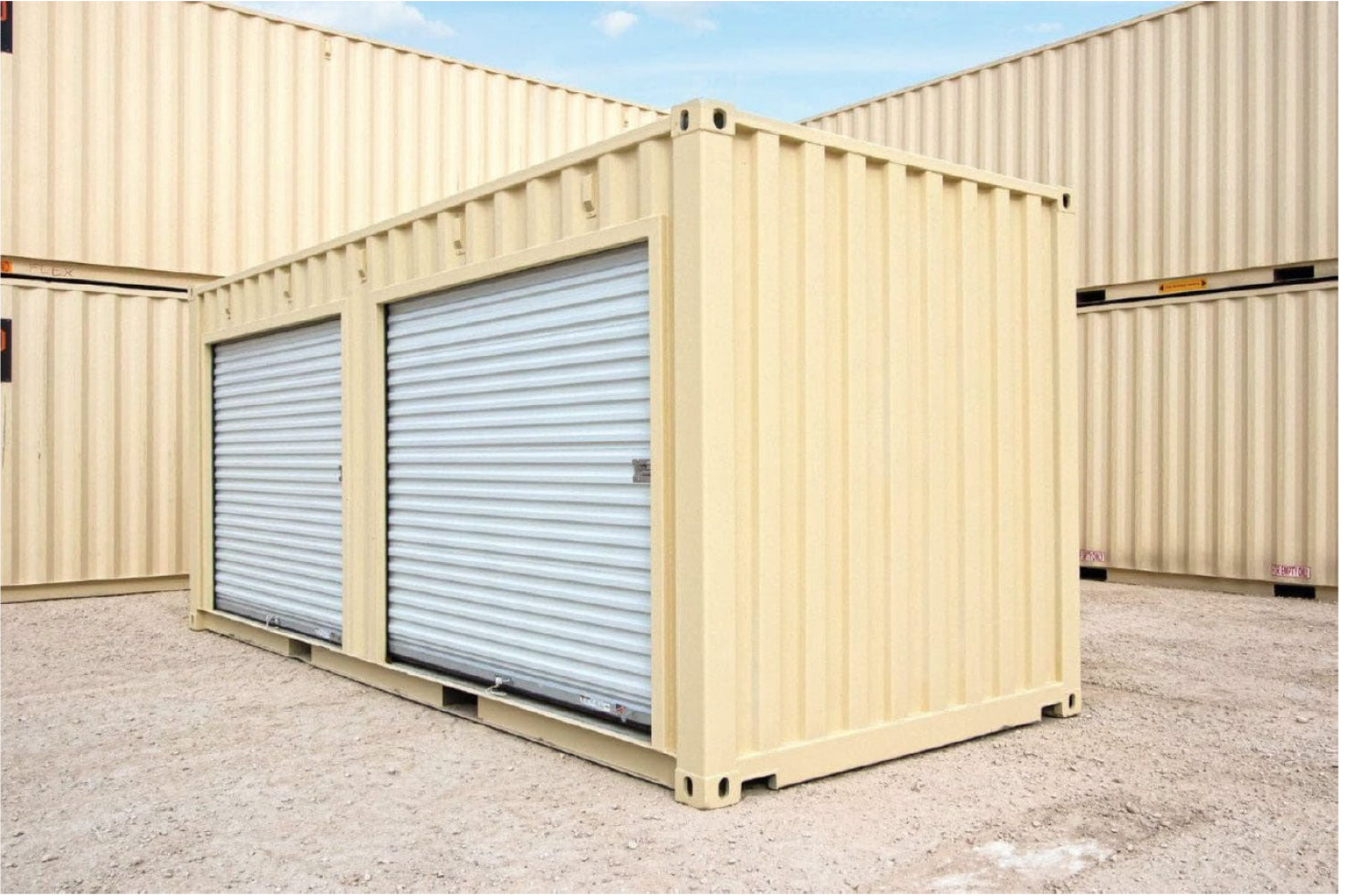
    Interior floor of a shipping container storage unit
    A container’s marine plywood floor is built to carry rolling loads directly on the steel cross-members.

    What the factory floor is made of

    Standard container flooring is 28mm (about 1⅓-inch) marine-grade plywood, historically treated with a preservative to resist rot, insects, and moisture during years of ocean shipping. It’s screwed or bonded to steel cross-members spaced roughly every 10–12 inches, which is what gives the floor its forklift-rated strength.

    Older treatment chemicals: what to know

    Containers manufactured years ago sometimes used older-generation wood preservatives that are no longer considered ideal for enclosed, occupied spaces. If you’re converting an older used container into a home, office, or anything with extended human occupancy, it’s worth confirming the floor’s treatment history or planning to seal, cover, or replace the floor as part of the build. Newer containers use preservatives that are generally considered safer for enclosed use, but checking is still good practice.

    When to replace vs. cover

    A floor with surface wear, minor staining, or light denting from years of cargo doesn’t need replacement — it can be cleaned, sanded, and sealed, or simply covered with your finish flooring of choice (vinyl plank, epoxy coating, or tile over a subfloor layer). Replace the floor outright if there’s rot, delamination, soft spots you can feel underfoot, or damage from a forklift tine puncture, since a compromised floor won’t safely support cross-member spans anymore.

    Finishing options for conversions

    For offices and cabins, a common approach is a thin subfloor layer over the existing plywood, then standard finish flooring — vinyl plank, laminate, or tile — the same as you’d choose for any small structure. For workshops or storage where durability matters more than looks, an epoxy coating applied directly over the sealed plywood holds up well to rolling equipment and spills.

    Related reading

    See our lifespan & maintenance guide for how flooring factors into a container’s overall condition grade, and our grades explained guide for what floor condition to expect at each grade. Browse storage unit containers with floors ready for immediate use.

    Setting up a storage container? See portable storage for business for flooring considerations on business inventory.

    Prepping before move-in? See our cleaning & interior prep guide.

  • Shipping Container Sizes: Complete Dimensions Guide (20ft, 40ft & High Cube)

    Shipping Container Sizes: Complete Dimensions Guide (20ft, 40ft & High Cube)

    Choosing the right shipping container size comes down to matching interior space to what you actually plan to store or build. This guide covers exact dimensions for every size we stock, plus guidance on which one fits common use cases.

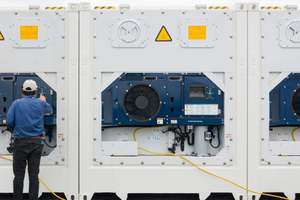
    40ft High Cube Refrigerated Shipping Container

    Shipping Container Dimensions at a Glance

    These are the industry-standard (ISO) exterior and interior dimensions for the container sizes and configurations we stock. For the full reference table including door openings, see our dimensions page.

    • 20ft Standard — 20′ x 8′ x 8’6″ exterior; roughly 19’4″ x 7’8″ x 7’10” interior
    • 40ft Standard — 40′ x 8′ x 8’6″ exterior; roughly 39’5″ x 7’8″ x 7’10” interior
    • 40ft High Cube — same footprint as a 40ft standard, but 9’6″ tall exterior for an extra foot of usable interior height
    • Refrigerated (Reefer) — slightly reduced interior space due to insulation and refrigeration unit housing

    20ft vs. 40ft: Which Should You Choose?

    A 20ft container is the most maneuverable option — it fits comfortably in most residential driveways and side yards, and is easier to place on uneven ground. It’s the right call for personal storage, a small job-site office, or a first-time buyer testing out container use.

    A 40ft container doubles your floor space for the same width and height, making it the better choice for bulk inventory, larger equipment, or any project where you’re already committing to a permanent placement. The cost per square foot of storage is usually lower with a 40ft unit than two 20ft units.

    When to Choose a High Cube

    The 40ft High Cube adds a full extra foot of interior height over a standard 40ft unit. That foot matters more than it sounds: it’s often the difference between fitting racking, HVAC ductwork, or tall equipment inside versus not. If you’re planning any kind of container conversion — office, workshop, or living space — the High Cube is almost always worth the modest price difference.

    Matching Size to Common Uses

    • Personal or residential storage — 20ft Standard
    • Job-site office or tool storage — 20ft Standard or 40ft Standard depending on crew size
    • Bulk inventory or warehousing overflow — 40ft Standard
    • Container home, office conversion, or workshop — 40ft High Cube
    • Cold storage for produce or temperature-sensitive goods — Refrigerated (Reefer)

    See our full guide to container uses for more detail on matching a configuration to your project.

    Ready to See Sizes In Stock?

    Browse current inventory by size on our shop page, or get a delivered price instantly with our quote calculator.

    Curious whether we deliver to your area? Check our state, city, and international delivery guides for pricing and timelines specific to your location.

    Related Articles