🚚 Ready to order today? Use code SHIPTODAY50 for $50 off any order — no signup needed. Shop Now

Category: Uses & Conversions

  • Refrigerated Shipping Containers (Reefers) for Sale: Uses, Power & Pricing

    Refrigerated Shipping Containers (Reefers) for Sale: Uses, Power & Pricing

    A refrigerated container, or “reefer,” is a standard container shell with a self-contained refrigeration unit built into one end wall — the same equipment that keeps produce and pharmaceuticals cold on container ships, now available as standalone cold storage for a business or property.
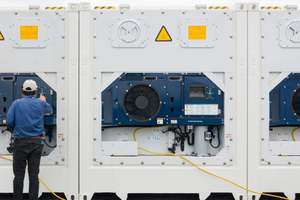
    Refrigerated shipping container reefer for sale
    A working reefer container’s refrigeration unit is built into the front end wall.

    How a reefer actually works

    Unlike a standard container, a reefer has fully insulated walls, a sealed floor designed for cold-chain use, and a refrigeration unit that plugs into standard 3-phase or single-phase power (depending on the model) to hold a set temperature, typically down to around -20°F on commercial units. Our 40ft high cube working reefer is fully functional and tested before delivery.

    Common uses beyond shipping

    Reefers are popular for restaurant and grocery overflow cold storage, farm and produce operations needing on-site refrigeration during harvest, event catering, and emergency or disaster-response cold storage. Because the unit is self-contained, it can run anywhere with adequate power, not just at a port or distribution center.

    Power requirements

    Plan for a dedicated electrical circuit sized to the unit’s compressor draw — this is meaningfully more power than a standard container conversion needs, so confirm your site’s available service before ordering. If continuous power isn’t available on-site, a generator sized for the refrigeration unit’s running and startup load is a common workaround for temporary placements.

    New vs. used reefers

    A “working reefer” designation means the refrigeration unit has been tested and certified functional, which matters far more for a reefer than the cosmetic grading that applies to dry containers — see our grades explained guide for how grading differs for specialized units like this.

    Maintaining a reefer long-term

    Refrigeration units need periodic servicing much like any commercial HVAC/refrigeration system — refrigerant checks, coil cleaning, and door seal inspection. Budget for this the same way you would for a walk-in cooler. Ready to see current reefer inventory? Browse refrigerated containers or request a delivered quote.
  • Shipping Container Homes & Cabins for Sale: Models, Pricing & Livability

    Shipping Container Homes & Cabins for Sale: Models, Pricing & Livability

    Container cabins have become one of the fastest ways to add a livable structure to a property — a guest house, a rental cabin, or a full-time tiny home, delivered mostly finished rather than built from scratch on-site.

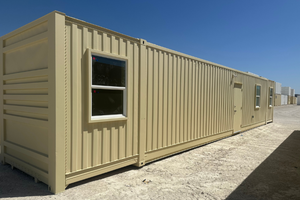
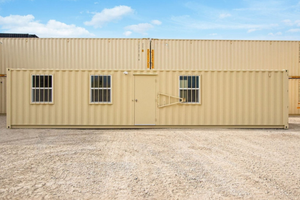
    Shipping container retreat cabin for sale
    A 53ft retreat cabin container, finished and ready for delivery.

    Retreat cabins

    Our 53ft retreat cabin and 20ft retreat cabin are built out as complete small living spaces — insulated, wired, and finished inside — sized for a guest house, rental unit, or standalone getaway. The 53ft model gives enough length for a separate sleeping area, while the 20ft is better suited to a compact studio layout.

    Bunkhouse cabins

    The 40ft bunkhouse cabin is designed around multiple sleeping berths rather than an open floor plan, which makes it a popular choice for worker housing on remote job sites, hunting camps, or any use case where you’re housing several people rather than one household.

    Modern cabins

    The 20ft modern cabin leans into residential-style finishes — larger windows, contemporary siding, and a layout closer to a studio apartment than a bunkhouse. It’s a strong fit for a backyard ADU or a short-term rental where appearance matters as much as function.

    What’s included vs. what you’ll still need

    Cabin models generally arrive insulated and framed with electrical rough-in, but plan separately for your foundation, utility connections, and any local permitting — see our full home building guide for the complete checklist before you buy.

    Financing a cabin build

    Because cabins cost more than a bare container, most buyers use financing to spread the cost. Browse the full cabins & tiny homes lineup to compare models side by side.

    Finishing the exterior? See our landscaping & curb appeal ideas.

  • Shipping Container Offices for Sale: Costs, Layouts & What’s Included

    Shipping Container Offices for Sale: Costs, Layouts & What’s Included

    A container office gets a business a real, lockable, climate-controllable workspace on a job site or lot in days rather than months — no framing crew, no foundation pour, just a delivery and a hookup. Here’s what’s typically included and how to choose the right one.

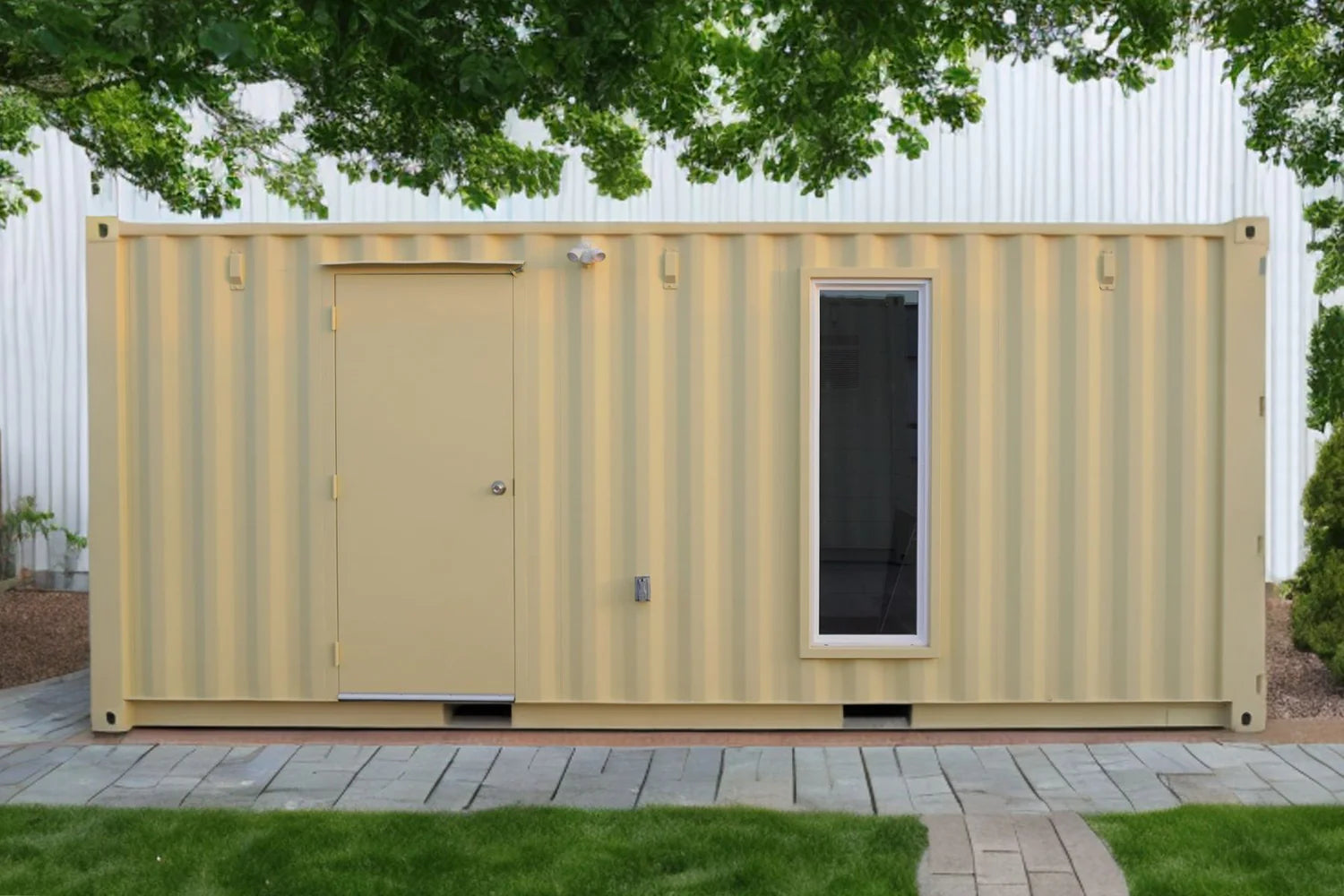
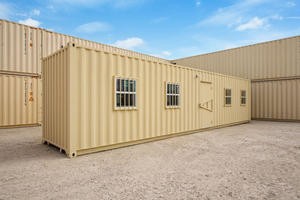
    Mobile shipping container office with bathroom
    A 40ft mobile office container with a built-in bathroom, ready for job-site delivery.

    What comes in a container office

    Most office containers, like our 40ft mobile office with bathroom, arrive insulated, wired for lighting and outlets, and finished with interior wall paneling — essentially move-in ready aside from connecting power and, if included, plumbing. Simpler units skip the bathroom and interior finish for a lower price point, which works well if the office just needs a desk, a heater, and a lockable door.

    Choosing a size

    A 20ft office comfortably fits one or two desks and a small meeting area — enough for a site foreman or small crew. A 40ft office, especially a 40ft insulated office with siding, gives room for multiple workstations, a small conference area, and often a private office or bathroom.

    Insulation and comfort

    Because an office is occupied for full workdays, insulation isn’t optional the way it might be for a storage container. See our insulation options guide for what to look for, and our electrical wiring guide for how power and HVAC circuits are typically run.

    Permits for a job-site office

    Temporary job-site offices are usually easier to permit than a permanent structure, but rules vary by municipality — check our zoning & permits guide before delivery, especially if the office will stay in place longer than a single project.

    Get a container office delivered

    Browse our full container office lineup, check financing options, or get a delivered price through our quote request.

  • Shipping Container Roofing Options: Flat vs Pitched Roof Conversions

    Shipping Container Roofing Options: Flat vs Pitched Roof Conversions

    A container’s factory roof is flat corrugated steel, crowned just slightly in the center to shed water toward the sides. That works fine on a ship or a job site, but for a conversion that will be lived in or seen by customers, roofing is one of the first design decisions that affects both function and curb appeal.

    Modern shipping container cabin exterior
    A modern cabin build keeping the factory flat roof, finished with clean siding and trim.

    Keeping the factory flat roof

    The simplest and least expensive option is to keep the original flat roof and add a membrane coating or additional insulation on top. This works well for offices, storage conversions, and budget cabin builds, and it keeps the container’s structural roof panel doing exactly the job it was engineered for. The tradeoff is a slightly warmer interior in direct sun unless roof insulation is upgraded, and ponding water can be an issue if the roof isn’t perfectly level.

    Adding a pitched roof

    A pitched roof is built as a separate structure over the container — typically a light steel or wood frame with standard roofing (metal panel or shingles) — rather than replacing the container’s own roof panel, which stays in place as the ceiling. This adds real headroom for a loft, sheds water and snow far more effectively than a flat surface, and gives a container home a look that reads as a house rather than a box. It’s the more expensive option, both in materials and in the structural work to support the added frame.

    Cool roofing and reflective coatings

    For hot climates, a reflective roof coating over the existing flat roof cuts solar heat gain significantly without the cost of a full pitched-roof build. This pairs well with the insulation upgrades covered in our insulation guide, and it’s a common addition to container offices and retail conversions that need to stay comfortable without oversized HVAC.

    Drainage still matters either way

    Whichever roof style you choose, confirm water sheds cleanly away from door seals and any roof penetrations (vents, skylights, HVAC curbs). Poor drainage around a modified roof is one of the more common sources of leaks in container conversions, precisely because the factory roof wasn’t designed with those cutouts in mind.

    Related reading

    See our modifications guide for what roof cuts and reinforcements involve structurally, and our home building guide for how roofing fits into a full build plan. Browse cabin & tiny home containers to see finished roofing styles on real units.

    Choosing a roof style for a real build? See our container homes & cabins for sale to compare finished roofing on real models.

  • Shipping Container Electrical Wiring Basics for Conversions

    Shipping Container Electrical Wiring Basics for Conversions

    Wiring a shipping container is closer to wiring a steel-framed building than a wood-framed one, and that distinction matters for both safety and code compliance. Here’s how power is typically run in a container office, cabin, or workshop build.

    Mobile office shipping container with electrical and plumbing fixtures
    A pre-wired mobile office container comes with a service panel, outlets, and lighting already installed.

    Start with a stud wall, not the steel

    Because the container’s walls are corrugated steel, conduit and boxes can’t be recessed into them the way they can into drywall. Most conversions build a thin stud wall (often 2×3 or metal studs) just inside the container skin, on top of the insulation layer. That stud wall carries the conduit, outlet boxes, and switch boxes, and also gives you a flat surface for interior wall finish.

    Bringing power in

    Most conversions bring in a standard 100 or 200-amp service, landing on a breaker panel mounted inside on the stud wall. For a job site or temporary setup, a generator or a temporary power pole feeding an exterior weatherproof panel is common instead. Either way, the entry point and panel location should be planned before insulation and interior walls go in, since retrofitting a panel afterward means cutting back into finished walls.

    Grounding to a steel structure

    A shipping container’s steel frame is electrically continuous, which is actually an advantage for grounding — the whole structure can serve as an equipotential bonding surface once it’s properly grounded to earth with a grounding rod and bonding conductor. A licensed electrician should handle this bonding; it’s not a step to skip or improvise, since an improperly grounded steel structure carrying a fault current is a genuine shock hazard.

    Lighting, outlets, and HVAC circuits

    Standard residential wiring practices apply once you’re past the entry and grounding: dedicated circuits for HVAC and any high-draw equipment, GFCI protection in wet areas like a container bathroom, and enough general-purpose circuits for lighting and outlets based on the container’s square footage. A 20ft container office typically needs 2–4 circuits; a full container home needs a proper load calculation like any residence.

    Permits and inspection

    Electrical work on a container conversion almost always requires a permit and inspection, the same as any building. Skipping this isn’t just a compliance risk — it can also void insurance coverage on the structure. See our zoning & permits guide for how to navigate this with your local building department.

    Related reading

    Wiring goes hand in hand with insulation — plan both together so conduit runs don’t conflict with foam thickness. See our home building guide for the bigger picture, or browse pre-wired office containers if you’d rather start from a unit that already has power roughed in.

    Wiring a specific build? See our guides to container offices for sale and container workshops & garages for how power needs differ by use case.

    Powering climate control equipment? See our climate control guide for mini-split circuit sizing.

  • Shipping Container Ventilation & Condensation Control Guide

    Shipping Container Ventilation & Condensation Control Guide

    Ask anyone who has opened a sealed shipping container on a humid morning about “container rain” and they’ll know exactly what you mean: water dripping from the ceiling as if it rained inside, even though the container never leaked. It’s condensation, and it’s one of the most common (and most avoidable) problems in container storage and conversions.

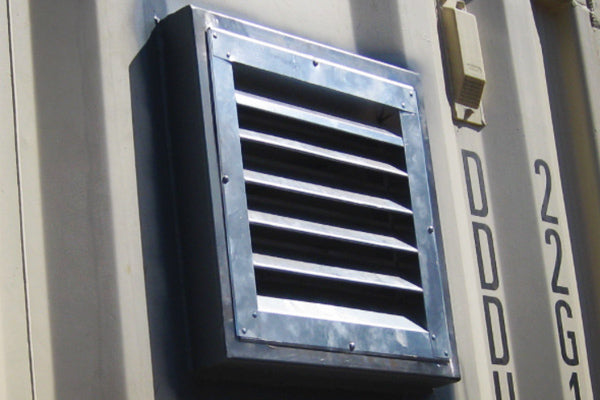
    Shipping container vent installed for airflow
    Passive vents installed high and low on a container let humid air escape before it condenses.

    Why condensation happens in a closed container

    Steel has almost no insulating value on its own, so the roof and walls of an uninsulated container quickly match the outside temperature. When warmer, moisture-laden air inside the box touches that cold steel, the air can’t hold as much water vapor and it condenses right on the ceiling and upper walls. Overnight temperature swings make this worse: warm daytime air gets trapped, then the steel cools rapidly after sunset and condensation forms while the container is sealed up.

    Passive ventilation: the simplest fix

    Louvered vents installed near the roofline (and sometimes paired with lower vents) let humid air escape and outside air circulate before moisture has a chance to condense. This is the standard, low-cost fix for storage containers holding goods that can tolerate some humidity swing, and it requires no power source.

    When ventilation isn’t enough

    For a conversion that will be occupied — an office, cabin, or workshop — passive vents alone usually aren’t enough, especially in humid climates. That’s where insulation (see our insulation guide) does the real work: by keeping the interior wall surface above the dew point, insulation stops condensation from forming in the first place rather than just venting it out after the fact. Active ventilation — a small exhaust fan tied to a humidity sensor — is worth adding to any insulated, occupied build.

    Protecting what’s stored inside

    If you’re using a container for long-term storage of anything moisture-sensitive — paper records, electronics, wood furniture, or dry goods — combine vents with moisture-absorbing desiccant packs or a small dehumidifier, and avoid stacking items directly against the walls or ceiling where condensation collects first. Pallets under stored goods also help keep anything off a concrete floor that can sweat in humid weather.

    Related reading

    See our lifespan & maintenance guide for how unmanaged moisture accelerates rust, and our modifications guide for adding vents, windows, or exhaust fans to an existing container. Browse vent kits or get in touch for help specifying a build for your climate.

    Building something that needs airflow? See our guides to container workshops and farm & agricultural storage, both of which depend on good ventilation.

  • Shipping Container Home Building Guide: Codes, Permits & Design Basics

    Shipping Container Home Building Guide: Codes, Permits & Design Basics

    Container homes have gone from a novelty to a genuinely popular way to build affordably, quickly, and with a smaller environmental footprint than traditional stick framing. But a livable container home is a real construction project, not just a box with furniture in it. Here’s what actually goes into building one, starting with a retreat cabin container or similar base unit.

    Shipping container retreat cabin used as a home
    A single 53ft retreat cabin container can serve as a complete small home or guest cabin.

    Start with your local building department, not the container

    The single biggest mistake first-time container home builders make is buying containers before confirming what their local building and zoning departments will actually permit. Most jurisdictions treat a container home exactly like a conventional structure for code purposes — it still needs a foundation, electrical, plumbing, egress windows, and insulation that meets local energy code. Some counties have never permitted one and require a variance; others have clear container-specific guidelines. Call before you buy. Our zoning and permits guide covers the questions to ask.

    One container, or a multi-container build?

    A single 40ft or 53ft high cube container gives you roughly 300–390 square feet — enough for a studio, guest house, or tiny home. For a full-size residence, most builders combine multiple containers side by side or stacked, cutting openings between units to create larger open rooms. Multi-container builds require structural engineering for the cut openings, since removing steel from a container’s walls or roof reduces its rigidity and needs to be compensated with reinforcement.

    Insulation and moisture control are non-negotiable

    Every livable container home needs insulation rated for its climate and a vapor barrier strategy that prevents condensation between the steel and the interior finish. See our insulation options guide for a breakdown of spray foam versus panel systems, and our ventilation guide for keeping air moving so moisture doesn’t get trapped against the walls.

    Utilities: electrical, plumbing, and HVAC

    Container walls are corrugated steel, which means conduit and plumbing typically run through a stud wall built just inside the container skin, not through the steel itself. This also gives you a cavity for additional insulation. See our electrical wiring basics guide for how power is typically run in a conversion.

    New, used, or one-trip for a home build?

    Because a home build lives with you for years and gets cut into structurally, most builders start with a cargo-worthy or one-trip grade container rather than a heavily weathered used unit. Our new vs. used comparison breaks down which grade makes sense for a residential build versus a job-site box that just needs to hold tools.

    Get started

    Once you’ve confirmed permitting locally, browse our container cabins & tiny homes to see base units, or reach out about financing a build.

    Ready to see finished models? Browse our container homes & cabins for sale to compare retreat cabins, bunkhouses, and modern cabin layouts.

  • Shipping Container Foundation & Site Preparation Guide

    Shipping Container Foundation & Site Preparation Guide

    A shipping container doesn’t need a foundation the way a house does — it’s a rigid steel box designed to carry its own weight at the corner castings — but the ground underneath it absolutely matters. The wrong site prep leads to a container that sinks unevenly, doors that jam, and water pooling against the walls. Here’s what to prepare before delivery, whichever container size you’re placing.

    40ft shipping container placed on a prepared site
    A level, well-drained site keeps a container’s doors, floor, and corner castings square for years.

    Why the ground matters more than a slab

    Containers are engineered to be lifted and stacked using the four corner castings, so nearly all of a container’s weight rests on those eight points (four bottom castings, plus the length of the bottom rail if it’s fully supported). If the ground under any one corner settles, the whole frame can rack slightly out of square, and that’s when doors stop lining up. Good site prep is really about giving those support points — and the rail between them — a stable, level, well-drained surface.

    Option 1: Compacted gravel pad

    The most common and cost-effective foundation is a compacted gravel pad, typically 4–6 inches of crushed stone graded flat and sloped slightly away from the container for drainage. It drains well, resists frost heave better than bare soil, and is inexpensive to install with a rented plate compactor. This is the standard choice for storage, job-site, and rental placements where the container may move again later.

    Option 2: Concrete piers or blocks

    For a more permanent placement, concrete piers poured at each corner (and at the midpoints of longer containers) lift the container off grade-level moisture and provide a precise, unmovable level surface. This is a common choice for container homes, offices, and cabins that will stay in place for years, since piers also make it easier to run utilities underneath the unit.

    Option 3: Full concrete slab

    A full slab is the most expensive option but makes sense for permanent installations, multi-container builds, or anywhere the container will be tied down structurally (high-wind zones, for example). A slab also gives you a finished, level surface right up to the container’s footprint, which is useful for buildings that will be walked in and out of frequently.

    What to check before delivery day

    Whichever foundation you choose, confirm ground clearance and access for delivery equipment beforehand. Delivery trucks generally need overhead clearance and enough straight-line room to slide the container off the trailer bed. See our delivery process guide for exact clearance requirements, and check local zoning and permit rules before you pour anything permanent.

    Related reading

    Once the site is ready, decide how the container itself needs to be finished — see our insulation guide and modifications guide. For sizing help, check container dimensions, and reach out for a delivery quote once your site is graded and ready.

    Planning a placement? See our guides to containers for storage, construction site containers, and portable storage for business for use-case-specific site tips.

  • Shipping Container Insulation Options: Complete Guide

    Shipping Container Insulation Options: Complete Guide

    A bare steel shipping container is a great structure and a terrible thermal envelope. Without insulation, an uninsulated box can swing from freezing overnight lows to well over 120°F inside on a sunny afternoon, and condensation (“container rain”) will form on the ceiling as warm, moist air meets cold steel. If you’re converting a container into an office, cabin, or workshop, insulation is the single upgrade that makes the space usable year-round.

    Insulated shipping container office with siding
    An insulated, sided container office keeps interior temperatures stable in any climate.

    Why steel containers need insulation

    Steel is highly conductive, so a container’s walls transfer outside temperature straight to the interior almost instantly. Insulation slows that transfer and, just as importantly, keeps the interior air warmer than the steel skin’s dew point so moisture doesn’t condense on the ceiling and drip onto whatever is stored below. Any conversion meant for people, electronics, or moisture-sensitive inventory should be insulated before anything else is built out.

    Spray foam insulation

    Closed-cell spray polyurethane foam is the most common choice for container conversions. It’s sprayed directly onto the interior steel, expanding to fill every rib and seam with no gaps for moisture to sneak through. At 2–3 inches thick it delivers roughly R-13 to R-20, and because it bonds to the steel it also adds a layer of corrosion resistance on the inside face. It’s a good fit for offices, cabins, and workshops where interior wall thickness loss (a few inches per side) isn’t a concern.

    Rigid foam panel insulation

    Rigid polyisocyanurate or XPS panels are cut to fit between furring strips and fastened to the container walls. Panels are less expensive per square foot than spray foam and easier to source locally, but seams need to be taped or foamed to stop air leaks, and they don’t provide the same moisture-sealing performance as a monolithic spray-foam layer. Panels work well for budget builds and DIY projects where a contractor isn’t spraying foam on-site.

    Insulated siding and pre-built options

    For a turnkey approach, many buyers choose containers that already come insulated and sided from the factory, like our insulated office with siding. These units pair interior spray foam with an exterior siding layer that also protects the paint and adds a residential look, which is useful if the container will sit somewhere visible rather than at the back of a job site.

    Which R-value do you actually need?

    For an occasionally-used workshop or storage-adjacent office, R-13 spray foam is usually enough. For a container that will be lived in or run HVAC year-round, aim for R-19 or higher, which typically means thicker spray foam plus a service cavity, or foam panels combined with a mineral wool layer. Climate matters too — a container home in a northern climate needs meaningfully more insulation than the same build in the Gulf Coast.

    Related reading

    Insulation is one piece of a larger conversion. See our modifications guide for what else can be cut, added, or reinforced, our electrical wiring basics guide for powering an insulated build, and new vs. used containers if you’re still deciding on a base unit. Ready to spec out a build? Financing options are available, and our team can help you pick the right container for insulation from day one.

    Shopping for an insulated build? See our container offices for sale and homes & cabins for sale — both come with insulation already factored into the build.

    Choosing HVAC equipment? See our heating & cooling options guide.

  • 10 Best Uses for a Shipping Container (Storage, Office, Home & More)

    10 Best Uses for a Shipping Container (Storage, Office, Home & More)

    Shipping containers have outgrown their original job. Beyond moving cargo across oceans, a steel container is one of the most versatile building blocks available for storage, workspace, and even living space. Here are ten of the most practical uses we see from our customers.

    53ft Retreat Cabin Shipping Container

    1. Residential & Personal Storage

    A 20ft container fits comfortably in most driveways and side yards, giving you weatherproof, secure storage for tools, seasonal items, or furniture — without the recurring cost of an off-site storage unit.

    2. Job-Site Offices

    A container office kit turns a standard unit into a lockable, insulated workspace for construction sites — see our office kits and accessories for windows, doors, and electrical add-ons.

    3. Farm & Ranch Storage

    Feed, tools, and equipment all need dry, secure storage that can sit in a field year-round. A Wind & Watertight container is often the most cost-effective option for this use case.

    4. Business Overflow Inventory

    When a warehouse runs out of room, a 40ft or 40ft High Cube container placed on-site is a fast, lower-cost way to add storage capacity without signing a new lease.

    5. Moving & Relocation

    Some households use a container as a self-managed moving pod — load it at your own pace, then have it delivered to your new address, instead of paying by the day for a rental truck.

    6. Renovation Storage

    During a home renovation, a container on-site keeps furniture and belongings protected and out of the contractor’s way, without an off-site storage trip.

    7. Container Cabins & Tiny Homes

    A 40ft High Cube provides enough interior height and length for a genuinely livable small structure. See finished configurations in our inventory under container cabins.

    8. Cold Storage & Refrigerated Use

    A working reefer container maintains temperature control for produce, meat, or other perishables — useful for farms, restaurants, and event catering that need mobile cold storage.

    9. Pop-Up Retail, Events & Production

    An open-side or double-door container converts easily into a walk-up service window or pop-up storefront, popular for events, markets, and temporary retail.

    10. Disaster Relief & Emergency Response

    Because they’re mobile and weatherproof, containers are frequently used for emergency supply storage and temporary shelter infrastructure during relief operations.

    Which Container Fits Your Use Case?

    Most of these uses come down to two decisions: size and condition grade. Our sizes guide and new vs. used guide both go deeper on making that call.

    Start Your Project

    Browse in-stock units by size and condition on our shop page, or get a delivered price with our quote calculator.

    Curious whether we deliver to your area? Check our state, city, and international delivery guides for pricing and timelines specific to your location.

    Related Articles

    More Buying Guides by Use Case

    Homes & cabins · Offices · Business storage · Pop-up shops & retail · Farm & agricultural storage