🚚 Ready to order today? Use code SHIPTODAY50 for $50 off any order — no signup needed. Shop Now

Blog

  • Shipping Container Climate Control: Heating & Cooling Options

    Shipping Container Climate Control: Heating & Cooling Options

    Steel holds heat and cold far more aggressively than a stick-framed wall, so climate control for a container conversion isn’t optional the way it might be for a garden shed — it’s what makes the space usable more than a few weeks a year.
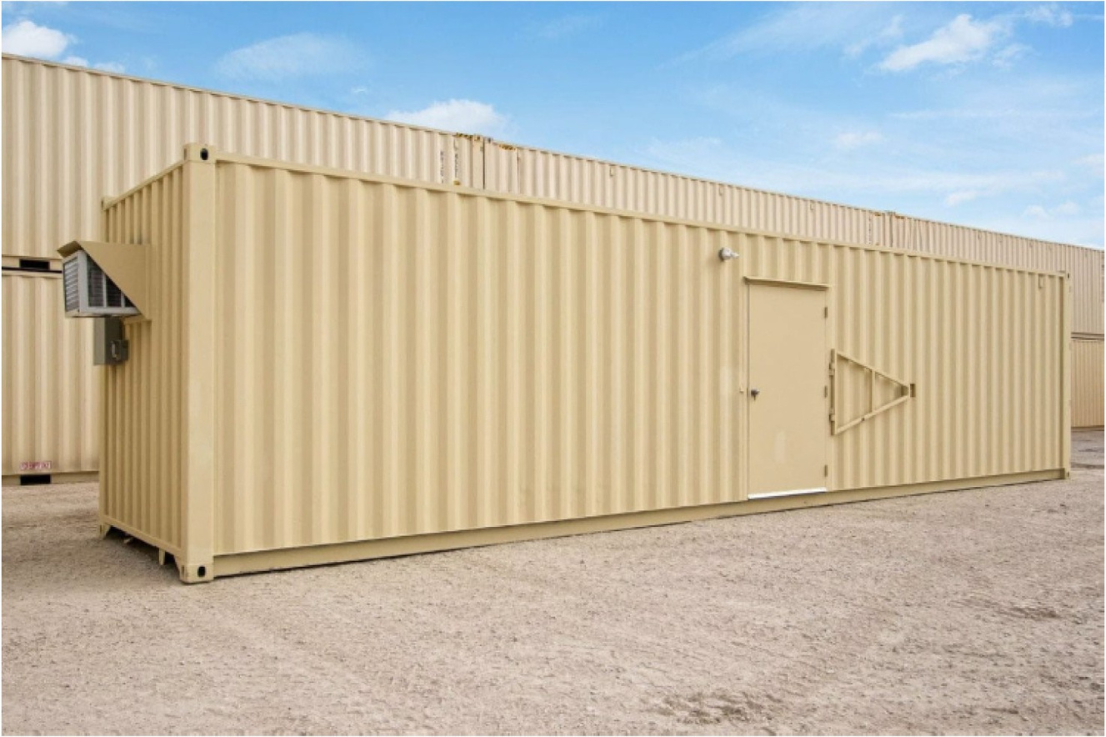
    Climate controlled shipping container
    A climate-controlled container keeps interior temperature stable regardless of the season.

    Insulation comes first

    Before choosing any heating or cooling equipment, get the container insulated — running HVAC in an uninsulated steel box means fighting a losing battle against a wall that transfers outside temperature almost instantly. See our insulation options guide for R-values and methods before sizing equipment.

    Ductless mini-splits: the standard choice

    A ductless mini-split is the most common climate control solution for container offices, cabins, and workshops, since it needs no ductwork — just a wall-mounted indoor unit connected to an outdoor compressor. Sizing depends on square footage and insulation quality; a well-insulated 20ft container typically needs less capacity than an equivalent uninsulated space.

    Portable and window units

    For temporary or budget setups, a portable AC unit or a through-wall window unit can work, though neither is as efficient or as clean-looking as a mini-split. These make more sense for a job-site container used seasonally than for a permanent conversion.

    Working reefers: purpose-built cold storage

    If the goal is genuine cold storage rather than comfort cooling, a working reefer container is a completely different, purpose-built system rather than a retrofit — see our reefer buying guide for how that equipment differs from a comfort-cooling mini-split.

    Powering climate control equipment

    Mini-splits and window units both need a dedicated circuit sized to their draw — see our electrical wiring guide for how this is typically planned alongside insulation and general power needs.

    Related reading

    See our farm storage guide and workshop guide for use-case-specific climate control needs.
  • 10ft Shipping Containers: Uses, Pricing & When They Make Sense

    10ft Shipping Containers: Uses, Pricing & When They Make Sense

    Not every storage or conversion project needs a full 20ft or 40ft container. A 10ft container gives you the same steel security and weather resistance in roughly half the footprint of a 20ft unit, which makes it worth considering whenever space, budget, or delivery access is tight.

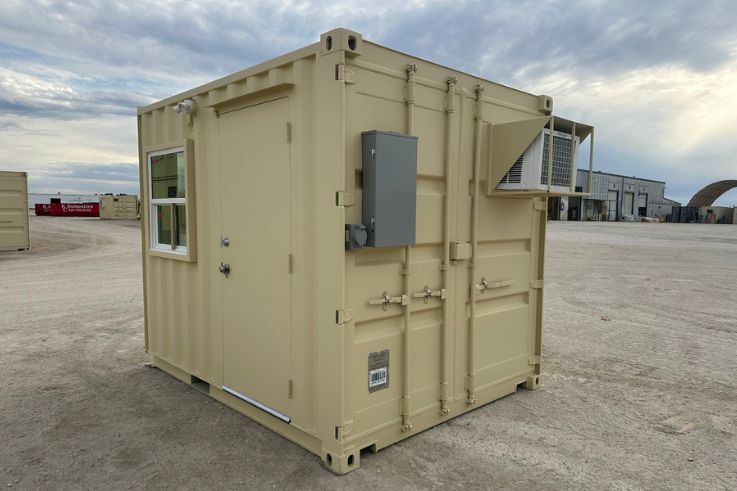
    10ft shipping container conversion
    A 10ft container’s compact footprint fits sites where a 20ft or 40ft unit won’t.

    How much space does a 10ft container actually give you

    A 10ft container offers roughly 80 square feet of interior floor space — enough for a motorcycle, a season’s worth of yard equipment, a small workshop bench, or overflow inventory for a small business. It’s also short enough to fit in spots a 20ft container can’t, like a narrow side yard or a small urban lot.

    Common uses for a 10ft container

    Beyond basic storage, 10ft containers get modified into small scale houses, compact site offices, and single-purpose utility rooms surprisingly often, since the smaller shell is cheaper to insulate and finish than a larger one. See our 10ft standard container for current specs, or our 10ft rental option if you only need it short-term.

    Pricing compared to larger sizes

    A 10ft container costs less than a 20ft container, but not exactly half as much — smaller containers don’t scale linearly since manufacturing and delivery overhead stay fairly fixed regardless of length. See our cost & pricing guide for how this plays out across sizes, and our storage sizing guide to compare capacity per dollar.

    When to size up instead

    If you’re not sure a 10ft container will be enough, it usually makes sense to size up rather than buy two small units later — a single 20ft container is almost always more cost-effective than two 10ft containers for the same total capacity. See exact dimensions before deciding.

    Get a 10ft container quote

    Check delivery availability for a 10ft unit in your area, or ask about financing through our financing options.

  • Shipping Container Pop-Up Shops & Retail Kiosks for Sale

    Shipping Container Pop-Up Shops & Retail Kiosks for Sale

    A container storefront turns heads precisely because it doesn’t look like a typical retail box, and it comes with a practical advantage too: the structure, security, and weather protection are already built in, so the build-out is mostly about the customer-facing finish.

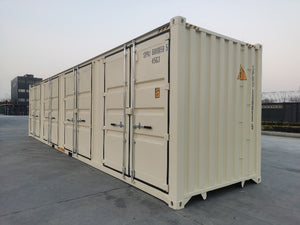
    Open side shipping container for retail kiosk conversion
    An open-side container converts easily into a walk-up service window or display storefront.

    Open-side and double-door layouts

    Our open side / double door container replaces most of one wall with wide door openings, which is the layout most pop-up shops and service windows are built around — it lets customers see and access the interior directly rather than through a single standard door.

    What a retail build-out typically adds

    Beyond the base container, most retail conversions add a service counter or walk-up window, display windows, insulation and a small HVAC unit for staff comfort, and exterior finish work (siding, signage mounts, paint) to match a brand. See our modifications guide for the full range of what’s structurally possible.

    Permitting a retail placement

    Retail and food-service placements typically face more scrutiny than storage or job-site containers, especially in commercial zones or shared parking lots. Check with your local planning department early — see our zoning & permits guide for the questions to ask before committing to a location.

    Mobile vs. permanent placement

    Some pop-up concepts move between locations or seasons, which favors a rented container over a purchased one — see our renting vs. buying guide. A permanent storefront location generally favors buying and finishing a container outright.

    Start your retail build

    Browse open-side & double-door containers or ask about combining a build-out with financing through our financing options.

  • Shipping Containers for Agricultural & Farm Storage: Sizes & Add-Ons

    Shipping Containers for Agricultural & Farm Storage: Sizes & Add-Ons

    Farms deal with a wider range of storage needs than almost any other property type — equipment, feed, chemicals, and sometimes perishable produce — and a shipping container’s combination of security and weather resistance fits almost all of them.

    Refrigerated shipping container for farm produce storage
    A working reefer container gives a farm on-site cold storage during harvest without a walk-in cooler build.

    Equipment and feed storage

    A 40ft container keeps tractors’ attachments, hand tools, and equipment secure and dry between seasons, while feed and chemical storage benefit from the same sealed, rodent-proof structure that makes containers useful for any dry-goods storage. A roll-up door unit makes loading feed bags or moving equipment in and out far easier than standard swing doors.

    Cold storage for produce

    During harvest, a working reefer container gives a farm on-site cold storage for produce without the capital cost of building a walk-in cooler — see our reefer buying guide for power requirements and pricing.

    Placement on farm and ranch land

    Rural properties usually have more flexibility on placement and fewer neighbors to consider, but delivery access still matters — confirm truck clearance to the intended spot per our delivery process guide, especially for containers headed to a field or pasture rather than a driveway.

    Weatherproofing and ventilation

    For anything stored long-term through humid or freezing seasons, add vents to prevent condensation damage to feed, seed, or equipment — see our ventilation guide for why this matters even in a sealed steel structure.

    Get containers delivered to your property

    Browse refrigerated and standard storage containers, or check delivery to your area.

  • Shipping Container Workshops & Garages for Sale: Setup Options

    Shipping Container Workshops & Garages for Sale: Setup Options

    A container workshop gives you a lockable, weatherproof workspace for woodworking, mechanics, or general fabrication without the cost of a stick-built garage — and unlike a garage, it can be relocated later if your needs change.

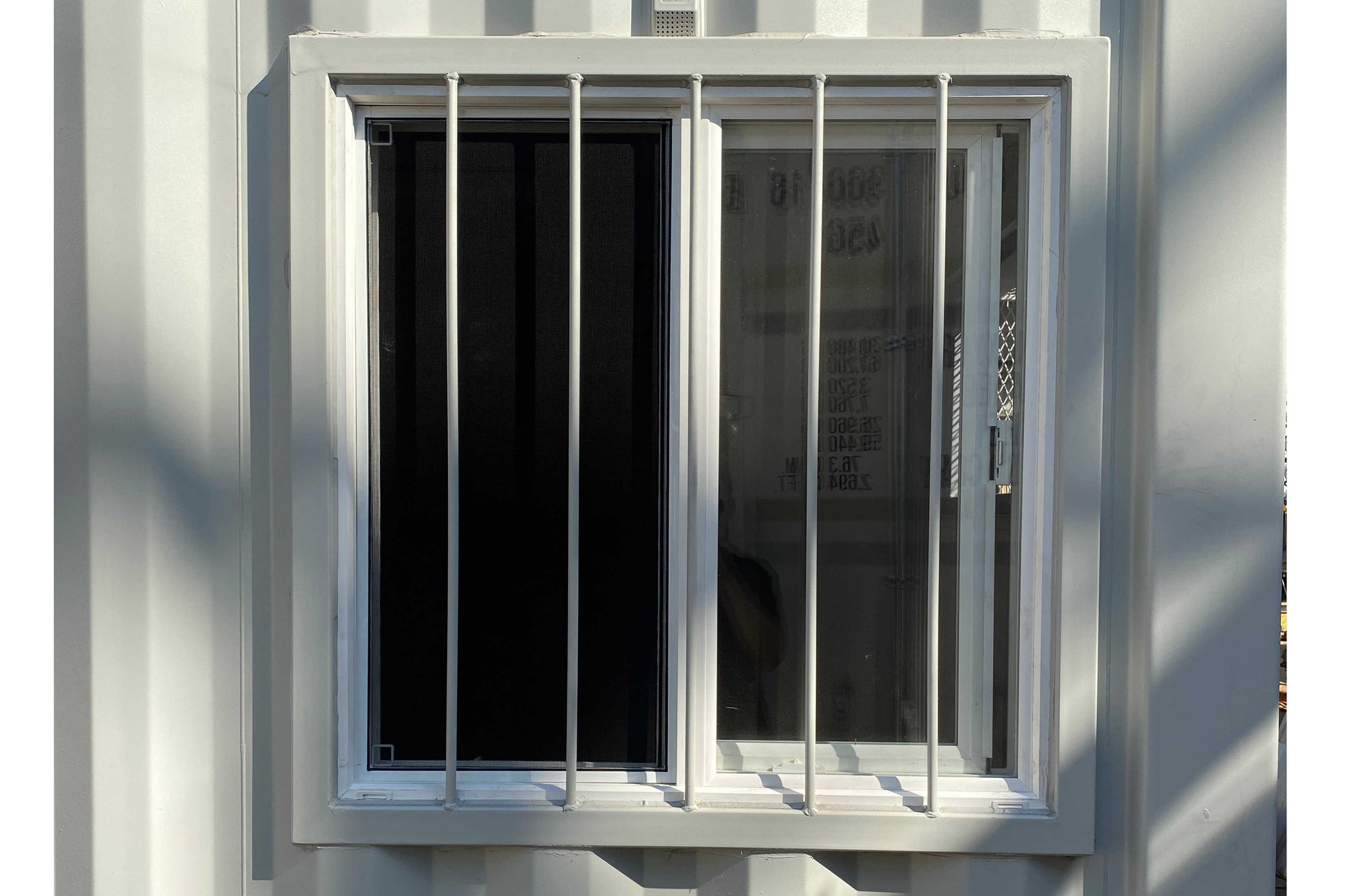
    Shipping container window for a workshop conversion
    Security-barred windows bring natural light into a workshop without sacrificing security.

    Sizing your workshop

    A 20ft container gives enough room for a single-bay workshop — a workbench, wall-mounted tool storage, and space to move around a project. A 40ft or 40ft high cube container roughly doubles that, enough for a small vehicle bay alongside a dedicated bench area. See exact dimensions before deciding.

    Light and ventilation

    Unlike storage containers, a workshop benefits from natural light and airflow. Windows with security bars bring in daylight without giving up the container’s inherent security, and adding vents or an exhaust fan matters even more here than in storage use, since workshops generate heat, fumes, and dust that need somewhere to go. See our ventilation guide for setting this up properly.

    Power for tools and equipment

    Workshops typically need more circuits and higher amperage than a simple office conversion, especially for 220V equipment like table saws or welders. Plan your electrical service around your heaviest tool’s draw — see our electrical wiring guide for how service panels and circuits are typically run in a container.

    Insulation for year-round use

    If you’ll use the workshop through cold or hot months, insulate it the same as you would an office — see our insulation guide for options that fit a workshop budget.

    Start your build

    Browse base container options to convert, or ask about combining a roll-up door, windows, and insulation into a single custom workshop order.

  • Shipping Containers for Construction Sites: Job-Site Storage & Security

    Shipping Containers for Construction Sites: Job-Site Storage & Security

    Tool theft and weather damage are two of the most avoidable losses on a construction site, and a shipping container solves both at once: a lockable, weatherproof box that can be delivered before the first day of work and moved again once the job wraps.

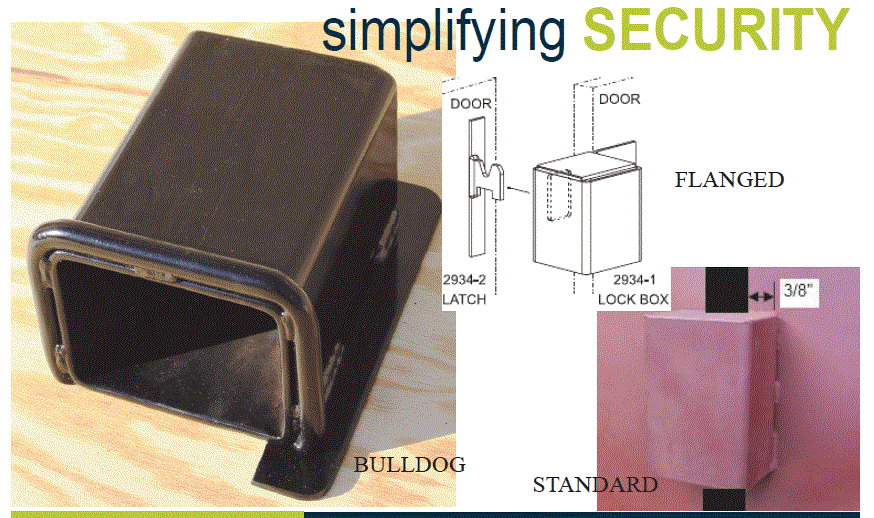
    Locked shipping container on a construction site
    A lock box turns a job-site container into a genuinely secure place to store tools and materials.

    Sizing for tools vs. materials

    A 20ft container is usually enough for a small crew’s power tools, hand tools, and consumables. Larger crews or projects storing bulk materials — lumber, fixtures, mechanical equipment — typically need a 40ft container instead. See our dimensions guide for exact interior capacity.

    Job-site security

    Tool theft from job sites is common enough that most contractors treat container security as a required expense, not optional. A welded lock box is the standard first upgrade — see our full security guide for hardware and site-setup tips that go beyond just the lock.

    Placement and site logistics

    Confirm delivery truck access before the container arrives — see our delivery process guide for clearance requirements — and place the container where it won’t block equipment movement or future phases of the build. A compacted gravel pad keeps the container level even as site conditions change during construction.

    Rent for the project, buy for the company

    For a single project, renting a container for the duration usually costs less than buying and reselling afterward. For a contracting company running multiple job sites long-term, buying pays for itself faster. See our renting vs. buying guide to run the numbers for your situation, or browse container rentals directly.

    Get a job site set up

    Check delivery availability for your site address, or request a quote covering delivery, a lock box, and the size that fits your crew.

  • Portable Storage Containers for Business: On-Site Storage Made Easy

    Portable Storage Containers for Business: On-Site Storage Made Easy

    For a business that needs more space without a lease commitment, a portable storage container delivered right to the lot is often faster and cheaper than renting warehouse space, especially for inventory that only needs to be accessed occasionally.

    Climate controlled portable storage container for business
    A climate-controlled storage container protects temperature-sensitive inventory on-site.

    Roll-up door units for easy access

    Our 40ft roll-up door storage unit replaces the standard swing doors with a full-width roll-up door, which makes loading and unloading with a forklift or pallet jack dramatically faster than working through a standard container opening. This is the most popular configuration for retail overflow and warehouse-adjacent storage.

    Climate-controlled storage

    For inventory sensitive to temperature or humidity — electronics, certain retail goods, paper records — a climate-controlled storage unit adds insulation and a small HVAC system to keep interior conditions stable regardless of outside weather, without the cost of building out a full conditioned warehouse bay.

    Placement for a business site

    Most businesses place storage containers in an existing parking area or side lot, which usually means no new foundation work beyond a compacted gravel pad for drainage and stability. Check local zoning first, particularly for placements visible from the street — see our zoning guide for what most municipalities require.

    Security for business inventory

    Because business inventory often has real resale value, most commercial placements add a lock box at minimum — see our security guide for a full setup, and confirm your contents are covered under your business insurance or a dedicated policy per our insurance guide.

    Buy or rent for seasonal needs

    If storage needs spike seasonally rather than year-round, renting may make more sense than buying — see our renting vs. buying comparison. Ready to add storage to your site? Browse portable storage units or get a delivery quote.

  • Modified Shipping Containers for Sale: Doors, Windows & Custom Builds

    Modified Shipping Containers for Sale: Doors, Windows & Custom Builds

    A modified container starts as a standard steel box and gets cut, reinforced, and finished for a specific use — anything from a single roll-up door added to a storage unit to a fully built-out cabin with windows, insulation, and interior walls.

    Modified shipping container bunkhouse cabin
    A fully modified bunkhouse cabin — cut, framed, insulated, and finished from a standard container shell.

    Light modifications

    The simplest modifications add functionality without touching the container’s core structure much: a personnel door cut into a side wall, windows with security bars, or a roll-up door replacing one end for drive-in access. These are common upgrades to an otherwise standard storage or job-site container.

    Full conversions

    At the other end, a full conversion like our 40ft bunkhouse cabin combines multiple cuts (windows, doors, vents), structural reinforcement around each opening, insulation, interior framing, and finished walls — essentially a small building built from a container shell rather than lumber.

    Why reinforcement matters

    Every cut into a container’s steel skin removes some of its structural rigidity, which is why legitimate modification work reinforces each opening with additional steel framing rather than just cutting a hole and trimming it out. This is also why stacking or structural load ratings change once a container has been modified — see our stacking guide for why that matters on multi-container builds.

    Popular modification combinations

    Beyond cabins and offices, common modification packages include roll-up door storage units, side-opening containers for retail or display, and multi-container combinations with connecting cutouts for larger open spaces. See our full modifications guide for a complete breakdown of what’s structurally possible.

    Ordering a custom modification

    Browse our modified container lineup for ready-built options, or reach out to discuss a custom combination of cuts, insulation, and finishes for your specific project.

  • Refrigerated Shipping Containers (Reefers) for Sale: Uses, Power & Pricing

    Refrigerated Shipping Containers (Reefers) for Sale: Uses, Power & Pricing

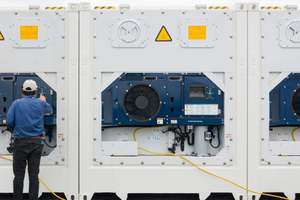
    A refrigerated container, or “reefer,” is a standard container shell with a self-contained refrigeration unit built into one end wall — the same equipment that keeps produce and pharmaceuticals cold on container ships, now available as standalone cold storage for a business or property.

    Refrigerated shipping container reefer for sale
    A working reefer container’s refrigeration unit is built into the front end wall.

    How a reefer actually works

    Unlike a standard container, a reefer has fully insulated walls, a sealed floor designed for cold-chain use, and a refrigeration unit that plugs into standard 3-phase or single-phase power (depending on the model) to hold a set temperature, typically down to around -20°F on commercial units. Our 40ft high cube working reefer is fully functional and tested before delivery.

    Common uses beyond shipping

    Reefers are popular for restaurant and grocery overflow cold storage, farm and produce operations needing on-site refrigeration during harvest, event catering, and emergency or disaster-response cold storage. Because the unit is self-contained, it can run anywhere with adequate power, not just at a port or distribution center.

    Power requirements

    Plan for a dedicated electrical circuit sized to the unit’s compressor draw — this is meaningfully more power than a standard container conversion needs, so confirm your site’s available service before ordering. If continuous power isn’t available on-site, a generator sized for the refrigeration unit’s running and startup load is a common workaround for temporary placements.

    New vs. used reefers

    A “working reefer” designation means the refrigeration unit has been tested and certified functional, which matters far more for a reefer than the cosmetic grading that applies to dry containers — see our grades explained guide for how grading differs for specialized units like this.

    Maintaining a reefer long-term

    Refrigeration units need periodic servicing much like any commercial HVAC/refrigeration system — refrigerant checks, coil cleaning, and door seal inspection. Budget for this the same way you would for a walk-in cooler. Ready to see current reefer inventory? Browse refrigerated containers or request a delivered quote.

  • Shipping Container Homes & Cabins for Sale: Models, Pricing & Livability

    Shipping Container Homes & Cabins for Sale: Models, Pricing & Livability

    Container cabins have become one of the fastest ways to add a livable structure to a property — a guest house, a rental cabin, or a full-time tiny home, delivered mostly finished rather than built from scratch on-site.

    Shipping container retreat cabin for sale
    A 53ft retreat cabin container, finished and ready for delivery.

    Retreat cabins

    Our 53ft retreat cabin and 20ft retreat cabin are built out as complete small living spaces — insulated, wired, and finished inside — sized for a guest house, rental unit, or standalone getaway. The 53ft model gives enough length for a separate sleeping area, while the 20ft is better suited to a compact studio layout.

    Bunkhouse cabins

    The 40ft bunkhouse cabin is designed around multiple sleeping berths rather than an open floor plan, which makes it a popular choice for worker housing on remote job sites, hunting camps, or any use case where you’re housing several people rather than one household.

    Modern cabins

    The 20ft modern cabin leans into residential-style finishes — larger windows, contemporary siding, and a layout closer to a studio apartment than a bunkhouse. It’s a strong fit for a backyard ADU or a short-term rental where appearance matters as much as function.

    What’s included vs. what you’ll still need

    Cabin models generally arrive insulated and framed with electrical rough-in, but plan separately for your foundation, utility connections, and any local permitting — see our full home building guide for the complete checklist before you buy.

    Financing a cabin build

    Because cabins cost more than a bare container, most buyers use financing to spread the cost. Browse the full cabins & tiny homes lineup to compare models side by side.

    Finishing the exterior? See our landscaping & curb appeal ideas.